President Trump’s pivot to a 15% global tariff ceiling within hours of a Supreme Court defeat exposes a constitutional fault line: when courts block emergency powers, does the executive simply shift to another statute, or does it signal the limits of unilateral trade authority?
Quick Take
- Trump announced a 15% global tariff hike on Truth Social, the maximum allowed under Section 122 of the Trade Act of 1974, after the Supreme Court invalidated his prior IEEPA-based tariffs in a 6-3 ruling.
- The new tariffs take effect February 24 for up to 150 days without requiring an emergency declaration, sidestepping the judicial reasoning that blocked his previous approach.
- This maneuver potentially exposes $200 billion in refunds from invalidated tariffs while setting up a 150-day clock for Congress to decide whether to extend the duties permanently.
- The shift highlights a fundamental tension: whether presidential trade authority bends to judicial limits or simply finds alternative legal pathways to achieve the same economic outcome.
The Supreme Court’s Unexpected Roadblock
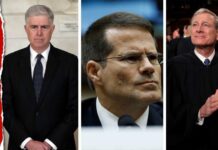
On February 20, 2026, the Supreme Court handed Trump a rare defeat on executive power. In a 6-3 decision, Chief Justice Roberts and the majority ruled that the International Emergency Economic Powers Act does not authorize the sweeping tariffs Trump imposed starting in 2025. The Court invoked the “major questions” doctrine, holding that IEEPA’s language to “regulate importation” does not clearly delegate unbounded tariff power to the president. Roberts emphasized the statute would risk a “dizzying” expansion of unilateral authority. Dissenters, including Justice Kavanaugh, argued tariffs represent traditional import regulation tools Congress implicitly authorized. The ruling struck down tariffs ranging from 10% reciprocal duties to 145% on Chinese goods, jeopardizing collected revenues and inviting refund litigation.
Small businesses like Learning Resources, Inc., and several states had challenged the tariffs through lower courts, which sided with challengers before the Supreme Court stayed enforcement pending review. The judicial check seemed definitive, constraining Trump’s trade war ambitions within hours of announcement.
Trump’s Statutory Pivot: Section 122 as Escape Route
Within hours of the ruling, Trump signed a proclamation invoking Section 122 of the Trade Act of 1974, imposing 10% tariffs effective February 24, 2026. Section 122 permits duties up to 15% for 150 days to address “large and serious” balance-of-payments deficits, requiring Commerce Department investigation for any post-150-day extension. This statute requires no emergency declaration, sidestepping the doctrinal reasoning that sank IEEPA. On February 21, Trump announced via Truth Social his intent to raise the 10% baseline to the full 15% ceiling, calling it “fully allowed and legally tested.” He described the Supreme Court decision as “ridiculous, poorly written, and extraordinarily anti-American,” framing the tariff increase as defiance of judicial overreach rather than compliance with limits.
The maneuver exposes a constitutional puzzle: if courts constrain one statute, can the executive simply pivot to another with identical economic effect? Section 122’s 150-day window creates a built-in sunset, theoretically addressing concerns about unbounded delegation. Yet it also forces Congress into a reactive position: extend the tariffs or allow them to lapse, knowing Trump controls the interim economic leverage.
The Refund Exposure and Unresolved Questions
The invalidation of IEEPA tariffs opens a liability estimated at $200 billion or more in refunds owed to importers who paid duties under stays during litigation. Trump’s proclamation excludes prior steel (25%), aluminum (10%), and certain auto tariffs imposed under different statutes, suggesting a narrower legal foundation for the new tariffs. The Commerce Department must now investigate balance-of-payments claims to justify post-150-day extension, a process typically requiring months. Trump’s immediate announcement of a 15% hike signals intent to maximize authority before Congress acts, but the statutory clock ticks inexorably toward a political decision point.
Uncertainty persists on timing: no updated proclamation raising tariffs to 15% had been signed as of February 21, suggesting Trump may be testing political reaction before formalizing the increase. Retaliation threats from trading partners loom, particularly given escalated Chinese tariffs under the prior regime. The question remains whether Section 122’s narrower delegation can withstand renewed legal challenge or whether courts will view the pivot as circumventing their ruling.
What This Means for American Commerce and Power
Short-term, 15% global tariffs compound import costs roughly 5 percentage points beyond the 10% baseline, risking inflation acceleration and supply chain disruption across retail, agriculture, and manufacturing sectors. Importers and consumers face higher prices; U.S. manufacturers gain temporary competitive advantage. Long-term implications hinge on Congressional action: extend the tariffs permanently, renegotiate them, or allow expiration. The 150-day window converts judicial restraint into legislative leverage, forcing lawmakers to own any extension rather than allowing executive unilateralism to persist unchecked.
Politically, Trump’s rapid pivot tests whether courts can meaningfully constrain trade authority or merely redirect it through alternative statutes. The Supreme Court majority sought to enforce statutory limits; Trump’s response suggests those limits may be porous. If Section 122 withstands challenge, the precedent invites future executives to navigate around major questions doctrine rulings by statute-shopping. If courts block this too, a genuine constitutional confrontation looms over the scope of presidential trade power—a clash between judicial limits and executive necessity that no statute can permanently resolve.
Trump says he will raise global tariffs to 15% after Supreme Court decisionhttps://t.co/UDQy9lsaya
— DustinEdlin (@blackbear675) February 21, 2026
Sources:
Trump says he will raise global tariffs to 15% after Supreme Court decision
Trump Tariffs: Supreme Court Ruling and 15% Global Tariff Announcement
Supreme Court Strikes Down Tariffs Under IEEPA
Supreme Court Opinion 24-1287: IEEPA Tariff Ruling