Meta’s internal documents reveal the company expects to pocket roughly $16 billion annually from scam advertisements—a staggering figure that has finally pushed bipartisan senators to demand federal investigators take action.
Quick Take
- Meta’s internal estimates show $16 billion in annual revenue from scam ads, approximately 10% of total advertising income
- US Senators Josh Hawley and Richard Blumenthal formally requested FTC and SEC investigations into Meta’s handling of fraudulent advertisements
- Internal documents leaked in late 2024 exposed the scale of scam ad proliferation on Facebook and Instagram platforms
- The probe targets both consumer protection violations and potential securities law breaches regarding investor disclosures
The $16 Billion Problem Nobody Wanted to Acknowledge
For years, Meta shareholders and users have heard reassurances about the company’s commitment to fighting fraud. Those statements ring hollow now. Internal Meta documents reveal the company anticipated earning approximately $16 billion from scam advertisements in 2024—representing roughly 10% of its annual advertising revenue. This wasn’t a bug in the system; it was baked into the business model. The sheer scale transforms what might have been dismissed as an unfortunate side effect into something far more damaging: evidence of systemic tolerance for criminal activity.
Exclusive: US senators call for probe of scam ads on Facebook and Instagram https://t.co/mQr2f3R1Mk https://t.co/mQr2f3R1Mk
— Reuters (@Reuters) November 24, 2025
The revelation exposes a fundamental tension in Meta’s operations. The advertising platform that powers the company’s dominance thrives on minimal friction for advertisers. That same frictionless approach creates paradise for scammers targeting vulnerable people. Counterfeit goods, financial fraud schemes, and phishing operations flourish in an environment where verification happens after the damage is done, not before.
When Senators from Both Sides Agree, Something Is Seriously Wrong
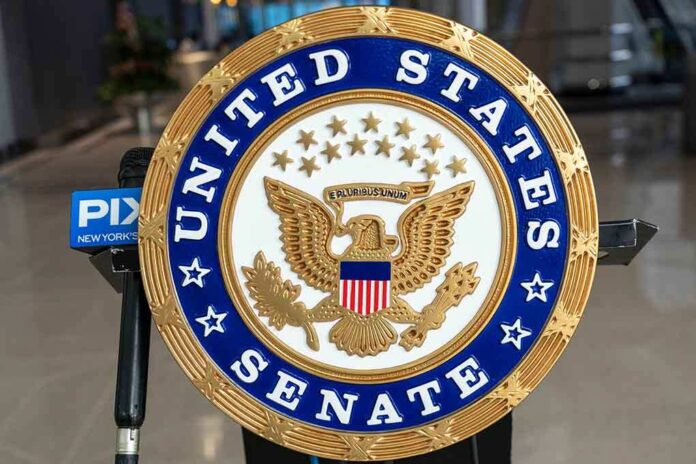
In November 2025, Democratic Senator Richard Blumenthal and Republican Senator Josh Hawley jointly called on the Federal Trade Commission and Securities and Exchange Commission to investigate Meta’s practices. Bipartisan agreement on tech regulation remains rare enough to command attention. Both senators recognized that Meta’s handling of scam advertisements violated consumer protection principles and potentially breached securities laws through inadequate investor disclosures about revenue sources.
This dual-agency approach matters strategically. The FTC can pursue consumer protection violations and demand operational changes. The SEC investigation examines whether Meta properly disclosed the risks and magnitude of fraudulent advertising revenue to shareholders. A company knowingly profiting from $16 billion in scam ads while downplaying the problem to investors crosses into securities fraud territory.
The Architecture of Deception
Meta’s advertising system was designed for scale and targeting precision, not fraud prevention. Advertisers can reach specific demographics with minimal human review. Scammers exploit this efficiency ruthlessly. They create convincing fake product listings, investment opportunities, and romance schemes. By the time Meta’s automated systems or human reviewers catch them, thousands of users have already engaged. The platform profits regardless of outcomes for consumers.
The company maintains that fighting fraud requires balancing user experience with safety. This argument fails scrutiny when internal documents show Meta anticipated and accepted $16 billion in scam ad revenue. That’s not a technical challenge; that’s a business decision. Meta prioritized the revenue stream over user protection because the financial incentives overwhelmingly favored looking away.
What Happens When Regulators Actually Investigate
The FTC and SEC investigations will likely examine whether Meta’s internal controls were adequate, whether executives knew about the scam revenue problem, and whether disclosures to shareholders accurately reflected the risks. Discovery will probably reveal communications between Meta’s advertising, legal, and compliance teams discussing the scam ad problem. Those documents could prove devastating in establishing knowledge and intent.
Meta faces potential financial penalties, mandatory operational changes, and reputational damage that extends beyond regulatory consequences. Advertisers already struggle with trust on social platforms. Legitimate brands hesitate to associate with environments saturated with fraud. Users increasingly question whether their personal data is worth the security risks. Regulatory action might accelerate these trends rather than reverse them.
The Broader Reckoning
This investigation signals that tech platform immunity from accountability has limits. Senators from both parties recognize that self-regulation failed catastrophically. Meta had every incentive to police its own platform and chose not to. When companies profit from harm, external enforcement becomes necessary. The question now is whether investigations lead to meaningful change or become another regulatory theater that leaves fundamental problems unresolved.
Sources:
Jerusalem Post – Meta’s $16 billion scam ad revenue
TipRanks – Senators call on FTC, SEC to investigate Meta over scam ads
HotHardware – Meta faces scrutiny over billions in scam ad revenue
Economic Times – US senators call for probe of scam ads on Facebook and Instagram