A $30 million robot just launched to grab a dying NASA telescope and shove it back into safe orbit before it burns up over your head.
Story Snapshot
- NASA’s Swift telescope is falling toward Earth after more than 20 years in orbit.
- A startup-built robot called Link launched on a Pegasus XL rocket to rescue it.
- Link must clamp onto a satellite that was never designed to be captured and push it hundreds of miles higher.
- If this works, it could change how we treat aging satellites and $500 million space assets.
NASA’s aging telescope is literally running out of sky
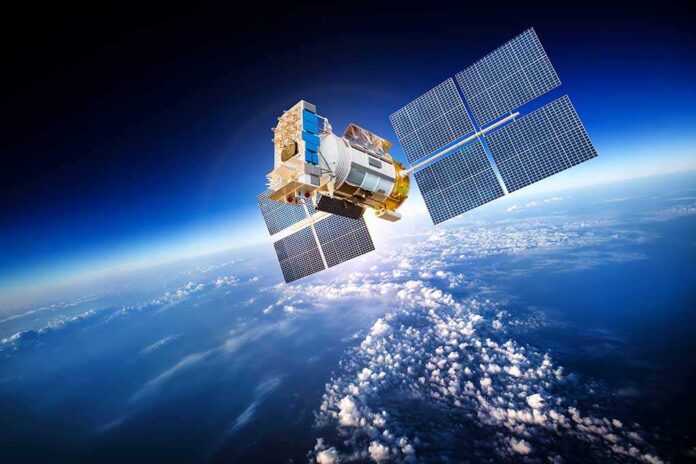
NASA’s Neil Gehrels Swift Observatory has quietly orbited Earth since 2004, hunting the brightest explosions in the universe, called gamma ray bursts. The telescope still works and still delivers useful science, but its orbit is decaying faster than planned because the upper atmosphere puffed up from recent strong solar activity. Engineers warn that without help, Swift could slam into the atmosphere and burn up before the end of 2026, taking a proven $250 million science asset with it.
Swift was never built for rescue. It has no docking port, no spare thrusters, and no easy “grab handle” for another spacecraft to use. That design made sense in 2004, when on orbit repair for small satellites was science fiction. Today, it is a problem. NASA now faces a simple choice that carries real cost: let a working telescope die, or attempt a dangerous first-of-its-kind mission to save it using private industry and new robotics.
The Link robot and its bargain-bin rescue contract
In September 2025, NASA awarded Arizona-based Katalyst Space Technologies a $30 million contract to design and fly a rescue spacecraft called Link. For space missions, that price is shockingly low; building a new telescope like Swift would run many times that amount. Katalyst, a small startup, turned the contract into hardware in about eight or nine months, finishing environmental tests at NASA’s Goddard Space Flight Center by early May 2026. That pace is lightning fast for a complex robotic mission, and speed always raises questions about risk.
Link is about 400 kilograms and carries three robotic arms plus thrusters designed for fine control. Its job is simple to say and brutal to do: rendezvous with Swift, circle it, clamp onto special structural fixtures on the telescope’s body, then fire its engines to raise Swift from roughly 360 kilometers up to around 600 kilometers. That higher orbit should add about 10 years of life to the observatory, giving taxpayers a second decade of science without building a new satellite from scratch.
A rocket’s last flight and a long, fragile timeline
NASA and Northrop Grumman picked the Pegasus XL rocket for Link’s ride to space, launched from under the Stargazer L-1011 aircraft over the Marshall Islands. This flight is expected to be Pegasus XL’s final mission, which some will see as smart reuse and others will see as an end-of-life gamble. Reports before launch described multiple delays from weather and technical issues, hinting at how tight and unforgiving the schedule really is.
Even now that Link is in orbit, the hard part is only beginning. The robot must spend one to two weeks chasing down Swift’s orbit plane, then several more weeks performing close-range maneuvers around a spinning, aging satellite. Engineers expect the grab and orbit raise to stretch over six to eight weeks for docking and at least a month for boosting. That long timeline gives many chances for navigation errors, sensor problems, or mechanical glitches at exactly the moment when failure means losing both spacecraft.
Catching an unprepared satellite at 17,000 miles per hour
The most daring part of Swift Boost is not the launch; it is the fact that no one has ever robotically captured an American government satellite that was never meant for servicing. Human astronauts once manually grabbed the Solar Maximum Mission with gloved hands, and later repaired the Hubble Space Telescope using well-designed fixtures and shuttle arms. Those missions had docking aids and trained crews. Link must do the same kind of job with no pre-installed ports, using cameras and sensors to find and grab ground-handling fixtures on Swift’s body while both objects race around Earth at about 17,000 miles per hour.
NASA’s Swift observatory (launched in 2004) is falling back to Earth, but startup Katalyst Space launched its LINK spacecraft today. LINK, the first fully autonomous U.S. satellite servicing mission, will rendezvous, grapple with robotic arms, and boost Swift’s orbit by 240 km,…
— Sakura | Emerging Tech (@SakuraTech21) July 4, 2026
Past efforts to test robotic arms and refueling in orbit, like NASA’s On orbit Servicing, Assembly and Manufacturing 1 program and commercial “space tug” projects, show that autonomous capture is possible but far from routine. Technical surveys of these systems describe precision limits, sensor blind spots, and complex software that can fail in non-obvious ways. Common sense says this mission carries real risk, but it also says you do not throw away working machines just because they are old if you can fix them for a fraction of replacement cost.
Why this high-risk rescue lines up with conservative values
Media coverage leans hard on words like “high risk,” “unprecedented,” and “long shot,” building a narrative that this effort is almost reckless. NASA officials echo that language, talking about “significant risks and rewards” and stressing that there are no guarantees. On one level, that is honest. On another, it can tilt public opinion toward fear and away from seeing the clear upside. For an American conservative lens, the facts point in a different direction.
This is a classic case of protecting sunk investment with targeted innovation. NASA is trying to save a proven, paid-for telescope using a relatively cheap, privately built robot, rather than spending far more tax dollars on a brand new spacecraft. The mission depends on a competitive startup, not a bloated monopoly contractor, and it aims to set a precedent for servicing many future satellites instead of throwing them away. That mix of thrift, private enterprise, and long term planning lines up well with common sense stewardship of expensive tools.
What success or failure will really mean
If Link grabs Swift and raises its orbit, the win is larger than one telescope. The mission would prove that commercial robots can safely service unprepared government satellites, opening the door to refueling, repairs, and orbital cleanups that save money and reduce space junk. NASA’s own future plans for robotic refueling assume this kind of capability. A working demonstration would make it much harder to argue for scrapping half useful satellites when a smart “tow truck” can give them new life.
If the mission fails, the fallout will be loud. Critics will question the fast development schedule, the use of a retiring rocket, and the choice to trust a startup with a national science asset. They will ask why more independent audits were not done before launch. But even a failure will deliver engineering data and hard lessons, and there is no evidence that anyone hid the risks or misled the public. The core facts are clear: Swift is falling, doing nothing wastes money and science, and trying to save it is a calculated bet that respects both fiscal responsibility and the value of proven machines.
Sources:
washingtontimes.com, livescience.com, nytimes.com, space.com, usatoday.com, pbs.org, apnews.com, en.wikipedia.org, katalystspace.com, instagram.com
© patriotnewsdaily.com 2026. All rights reserved.