In the heart of the Bronx, a sudden gas explosion tore open a public housing high-rise—yet not a single life was lost, exposing the razor-thin line between catastrophe and resilience in America’s aging urban infrastructure.
Story Snapshot
- No injuries or deaths despite a dramatic high-rise collapse after a boiler room gas explosion.
- The incident spotlights urgent risks facing New York’s public housing infrastructure.
- Emergency services executed a rapid, coordinated multi-agency response.
- Public scrutiny intensifies over NYCHA’s maintenance and safety protocols.
Explosion Rips Through Bronx Public Housing, But Disaster Averted
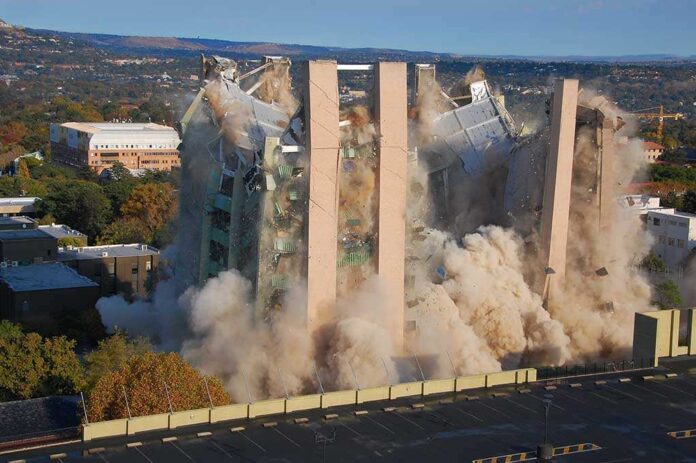
A thunderous explosion shattered the morning calm at the Mitchel Houses in Mott Haven, Bronx. Residents described a blast that rattled windows for blocks as the boiler room—an aging linchpin of the building’s infrastructure—erupted, toppling an entire side of the 17- to 20-story tower. Within minutes, emergency sirens wailed through the city streets, signaling a response that would test the mettle of New York’s finest and the resolve of its public institutions.
FDNY, NYPD, the Office of Emergency Management, and Con Edison converged on Alexander Avenue in a choreography honed by years of hard lessons in urban disaster. They evacuated the F and G apartment lines, sweeping the debris-strewn corridors with K-9 units and thermal cameras, searching for survivors. A stunned crowd gathered behind police tape, their faces etched with disbelief—and, as the hours ticked by without reports of injury or death, a dawning sense of relief. Mayor Eric Adams arrived on scene, speaking solemnly of gratitude for lives spared and pledging support for those displaced by the collapse.
Old Buildings, Old Problems: The Infrastructure Time Bomb
Mitchel Houses, a NYCHA complex built in 1966, stands as a relic of postwar optimism and a testament to the challenges now facing public housing nationwide. Comprising 10 buildings and housing 3,500 residents, its centralized boiler system is a familiar hazard in the city’s aging real estate portfolio. For years, advocates and engineers have warned that deferred maintenance and outdated gas infrastructure create a powder keg beneath the city’s feet. The Bronx explosion echoes the tragic 2014 East Harlem blast, which killed eight and wounded dozens, and a string of smaller incidents that have plagued NYCHA properties in recent years.
Public housing residents have grown accustomed to the routine: complaints about gas leaks, the acrid scent of boiler exhaust, the slow crawl of repairs. After this latest catastrophe, patience is wearing thin. The question reverberating across kitchen tables and community board meetings is no longer if another incident will occur, but when—and who will pay the price.
The FDNY is responding to a partial building collapse at 207 Alexander Avenue in the Bronx. pic.twitter.com/Gxuf1re87u
— FDNY (@FDNY) October 1, 2025
Inside the Response: Coordination Amid Chaos
Emergency services moved with practiced efficiency, their actions reflecting both the gravity of the situation and the lessons learned from past failures. FDNY led the initial search and rescue, while NYPD secured the perimeter and coordinated evacuations. The Office of Emergency Management oversaw city resources, and Con Edison initiated shutdowns to prevent secondary explosions. Demolition teams prepared to remove unstable chimney remnants, and utility crews began assessing when heat, hot water, and cooking gas could safely be restored to the battered complex. Throughout, city officials maintained a steady stream of communication to an anxious public, emphasizing transparency and the absence of casualties.
Yet beneath the surface of this well-drilled response lies a more troubling reality: the city’s emergency playbook is being tested with increasing frequency as infrastructure ages and budgets strain. Each successful operation is both a victory and a reminder of the next inevitable call for help.
Aftermath and Accountability: The Road Ahead for Public Housing
The immediate fallout—streets closed, families displaced, utilities cut off—marks only the beginning of the reckoning. Residents from the affected apartments are now scattered, facing weeks or months before they can return. The cost of emergency response, demolition, and repairs will climb into the millions, stoking political tensions and public anger over persistent neglect. Calls for regulatory reform and capital investment are growing louder, as policymakers grapple with the need to modernize New York’s vast inventory of public housing before another disaster strikes.
Experts agree: the Bronx explosion is unlikely to be the last such event unless systemic issues are addressed. Building safety professionals and utility experts stress the urgency of proactive inspections, upgraded gas lines, and robust maintenance regimes. Urban studies scholars highlight the chronic underfunding that leaves NYCHA scrambling to patch leaks instead of planning renovations. Even as the city celebrates its luck in avoiding tragedy this time, the clock is ticking for the next test of its resolve—and its infrastructure.