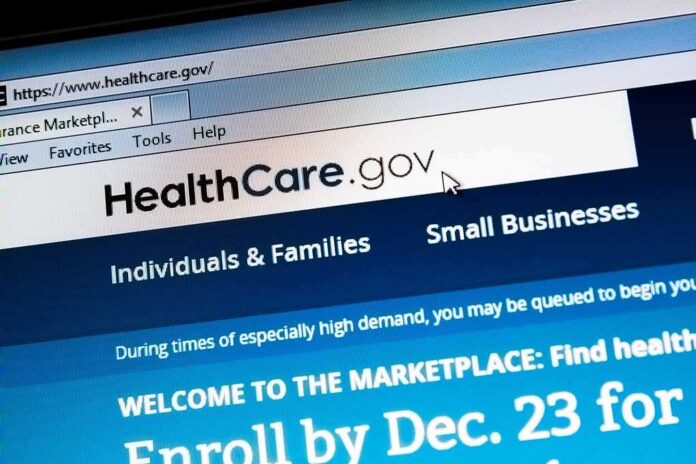
One number changed the debate: over one million Obamacare enrollments with no Social Security number on file.
Story Snapshot
- Federal officials say more than one million marketplace enrollments list no Social Security number [18].
- Government investigators reportedly got subsidies using 20 fake identities with bad numbers [2].
- Complaints about unauthorized enrollments reached roughly 275,000 in 2024 [20].
- Program integrity actions reportedly blocked or removed millions from subsidies by 2026 [5].
What the one-million claim actually means
Health leaders tied to the Trump administration said the federal marketplace still contains over one million enrollments with no Social Security number on the application and with no premium being paid by the consumer [18]. That pattern signals risk for fake or “phantom” accounts built to capture subsidies. The claim matters because tax credits flow monthly to insurers. If the person is not real, or not eligible, taxpayers eat the cost while accountability gets harder with time.
Critics point out that missing numbers can occur for reasons that are not fraud. Some household members are non-applicants and do not have to give a Social Security number. The Centers for Medicare and Medicaid Services says consumers can provide their number directly to the marketplace instead of to an agent, which can leave blanks in broker files [14][16]. Those situations exist, but they do not explain clusters of zero-premium, broker-assisted accounts with no numbers at scale [18].
The government’s red flags and why they matter
The Government Accountability Office reportedly ran a covert test. Every one of 20 fake identities using false or never-issued numbers obtained subsidized coverage [2]. A perfect failure rate like that suggests controls did not stop obvious fakes. Separately, policy analysts flagged an abnormal pile-up of enrollees claiming incomes in the richest subsidy band, which can be a magnet for abuse [1]. None of this proves every suspicious file is fraud. It does say the gatekeeping system needs stronger locks and better logs.
Complaint data add weight. Analysts cite roughly 275,000 complaints in eight months in 2024 tied to unauthorized sign-ups or plan switches on the federal platform [20]. Regulators then closed loopholes in enhanced direct enrollment tools, suspended hundreds of brokers, and required three-way call verification for changes. After that fix, broker-initiated changes dropped by nearly 70 percent, and commission-steering changes fell almost 90 percent [20]. When a single rule change slashes abuse signals, the original process had real gaps.
Program integrity actions that actually moved the needle
The Department of Health and Human Services reported that program integrity efforts stopped 1.5 million people from getting ineligible subsidies and blocked another 1.4 million through February 2026 [5]. That scale shows two things. First, prior guardrails were too loose. Second, targeted enforcement can work without breaking the marketplace for honest users. Conservatives value fairness and stewardship. Stopping ineligible subsidies protects both. It also reassures the millions who play by the rules that the system will not punish their honesty.
From grok
Yes, the core claim is substantially true, according to recent announcements from HHS Secretary Robert F. Kennedy Jr. and CMS Administrator Dr. Mehmet Oz, backed by administration data and prior audits. 
Key facts
• Over 1 million enrollees without SSN: The Trump…— Marcella Chai (@ArabJewRefugee) June 28, 2026
Some push back on extrapolated estimates, like tens of billions lost or millions of improper sign-ups, since those rely on patterns instead of case-by-case proof [1]. Skepticism is healthy. But dismissing the entire problem as “complexity” ignores hard signals: the covert test’s approvals, the flood of consumer complaints, and the sharp drop in suspect broker changes after new checks [2][20]. Smart policy balances due process with common-sense controls that stop obvious abuse fast while auditors sort the rest.
How to fix the holes without harming honest enrollees
Three steps would close the biggest gaps. First, enforce real-time Social Security number validation with clear error codes and instant holds when numbers fail checks, followed by rapid human review. Second, require consent verification with time-stamped voice or text logs for any broker-initiated enrollment or plan change; keep those logs for audits. Third, track zero-premium enrollments with missing Social Security numbers as a special risk class and run monthly reconciliations with the Internal Revenue Service. Each step targets risk without blocking the eligible.
Congress and the executive branch should also demand transparent data. Publish de-identified counts on missing-number enrollments, unauthorized-change complaints, and confirmed fraud outcomes by month and by channel. Independent auditors can then test claims on both sides. Sunlight disciplines bad actors, rewards honest brokers, and builds trust. When government pays the bill, the burden of proof sits with those who want the money. That is not partisan. That is common sense, and taxpayers deserve nothing less.
Sources:
[1] Web – A Million Obamacare Users Enrolled Without a Social Security Number
[2] Web – The Persistent Obamacare Enrollment Fraud – Paragon Health Institute
[5] Web – The Great Obamacare Enrollment Fraud – Paragon Health Institute
[14] Web – How We Use Your Data | HealthCare.gov
[16] Web – [PDF] ACA Exchange Enrollment in 2026 – ASPE.hhs.gov
[18] Web – Protecting Against Fraud ACA Marketplaces Without Hiking Premiums
[20] Web – Healthcare insurance fraud detection using data mining – PMC – NIH
© patriotnewsdaily.com 2026. All rights reserved.