The Justice Department sued California and told election officials not to count suspect ballots until citizenship is checked.
Story Snapshot
- Federal lawsuit targets more than 20,000 flagged voter registrations
- Justice Department asked California to segregate related mail ballots now
- California leaders disputed the evidence and the rushed 48-hour demand
- Counting noncitizen votes in federal races is illegal under federal law
What The Lawsuit Actually Seeks, Right Now
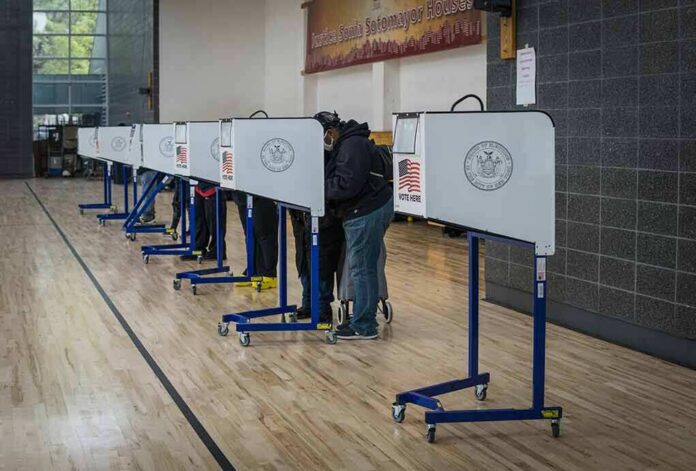
The Justice Department filed a complaint in federal court naming California and top election officials. The filing says more than 20,000 people on state voter lists are likely noncitizens. The department asked the court to stop the state from tabulating any vote-by-mail ballots linked to those names until each person’s citizenship is checked. The focus is the upcoming federal election, not a years-long records fix that can wait for a slow audit.
Federal lawyers say they delivered a list of those names to state and Los Angeles County officials and told them to separate any returned ballots. The department’s letter, attributed to Acting Deputy Attorney General Trent McCotter, asked for quick action. The complaint also argues that federal law bans noncitizens from voting for federal offices and that courts can order simple safeguards to prevent it before votes get mixed into the count.
Why The Number And The Timing Matter
The figure is large enough to swing a close race if the flags prove accurate. That is why the relief is preventive, not punitive. The department is not asking a judge to toss lawful citizens’ ballots. It is asking to hold them aside until the state confirms status. That approach tracks common sense: count every legal vote, only legal votes. Critics call the timing disruptive and say rushed checks risk catching naturalized citizens in a net built on old data.
The government’s own wording says “likely” noncitizens, which signals uncertainty. The public record does not show the match rules or the error rate. That leaves a gap between a bold claim and final proof. A firm remedy—segregate, verify, then count—fits that gap better than canceling ballots or waving them through. The court will ask whether the request is narrowly tailored and whether the state has a practical way to run the checks in time.
How California Responded And What That Signals
California Secretary of State Shirley Weber said the federal government did not provide evidence to back the claim that the roughly 20,000 are noncitizens. She also said the department did not give her office the actual list and lacked legal authority to demand the review. Los Angeles County Registrar Dean Logan said his office did not open the thumb drive because of data privacy and security protocols. Weber also blasted the 48-hour deadline on the eve of an election as unrealistic.
On Friday, acting Deputy Attorney General Trent McCotter sent a letter to Los Angeles County and California officials stating that noncitizen voting in a federal election is a federal crime and that knowingly counting such ballots risks criminal liability. Trump shared the letter…
— Keith Ainsworth (@AinsworthKeith) October 18, 2026
Reporters noted that some states have mistakenly registered noncitizens due to motor-vehicle data errors, and that it is often unclear how many of those people ever voted. That background cuts both ways. It explains why a “likely” list can be messy. It also shows why a refusal to even open the data looks careless when federal law forbids noncitizen voting. Responsible officials should protect data security and still check names in a controlled process.
The Legal Stakes: Narrow Guardrails Or Open Floodgates
Federal law bans noncitizen voting for federal offices. The department argues a court can order a pause on counting these ballots to enforce that rule. California can argue due process, workload, and the risk of false positives. A judge will weigh harm on both sides: the harm of counting illegal votes versus the harm of delaying lawful votes. The clean middle lane is to segregate ballots, notify voters, and verify status under a short, transparent plan.
American conservative values point to a clear standard: make voting easy, cheating hard, and records accurate. That means no shortcuts for either side. The department should disclose the matching logic to the court, with a sample error check under seal if needed. The state should run a rapid review using citizenship and naturalization records and certify the results to the court. Ballots from confirmed citizens get counted. Ballots from confirmed noncitizens do not. Unclear cases get resolved fast, not ignored.
What To Watch Next
Watch for a court order on segregating ballots and a timeline for verification. Look for how many listed voters actually returned a ballot. Track whether the list includes duplicates, old records, or newly naturalized citizens. Judge the claims by the reconciliation numbers that follow, not by talking points. If the list proves accurate, prosecutions for knowing violations should follow. If it is riddled with errors, both agencies must fix how they match records before the next election.
Sources:
pjmedia.com, justice.gov, politico.com, usnews.com, usatoday.com, apnews.com, cnn.com, nbcnews.com, cnbc.com
© patriotnewsdaily.com 2026. All rights reserved.