Minutes after takeoff, an Emirates A380 turned into a flying rainstorm — and still finished the flight.
Story Snapshot
- Emirates says cabin “condensation” caused water to pour from the ceiling on EK123
- Crew moved affected passengers and continued the flight to Istanbul as scheduled
- Video of the “indoor waterfall” went viral, amplifying the shock for viewers
- Moisture build-up events can happen when cold metal meets warm, humid cabin air
What Happened On EK123
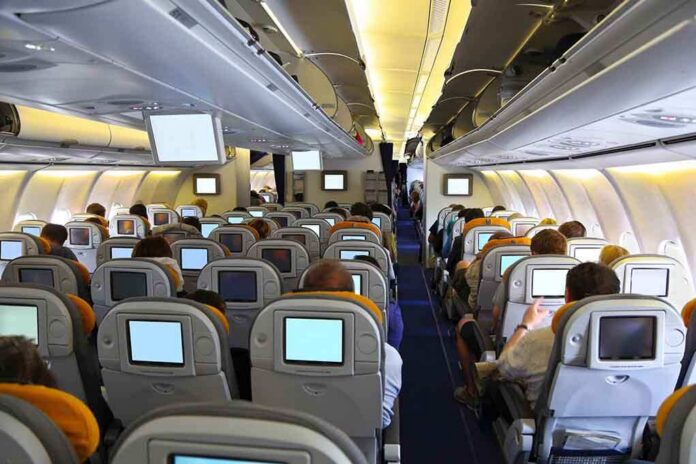
Water began pouring from an overhead area shortly after takeoff on Emirates flight EK123 from Dubai to Istanbul on September 17, 2026. Passengers grabbed blankets and moved bags as the stream soaked several rows. Emirates said condensation had accumulated and became visible in part of the cabin soon after departure. The airline said crew followed procedures, relocated wet-seat customers, and the flight continued to Istanbul without diversion, which matches multiple outlet reports that quoted the same statement.
Footage from inside the Airbus A380 showed a steady sheet of water falling near an exit sign and along ceiling panels. The clip spread across social platforms and news sites, which locked the “waterfall plane” image in the public mind. The coverage identified the route, date, and aircraft type the same way across stories, supporting key facts despite the surprise of the visuals. Emirates framed the cause as condensation, not a plumbing break or structural issue, and emphasized safe continuation.
Why Cabins Can “Rain” Without A System Failure
Commercial jets fight moisture on every flight. Warm, humid cabin air meets a fuselage chilled by high-altitude cold, and water vapor condenses on hidden metal surfaces. Aircraft use insulation blankets and drainage paths to manage this. If gaps appear or water pools, it can drip into the cabin and look dramatic, even when the aircraft remains airworthy and systems are stable. Engineers have studied “rain in the plane” for decades and describe it as a nuisance that good design aims to control, not a direct safety failure.
Moisture events cluster around climb and descent, when temperature and pressure swing fast. The A380’s large volume, full cabins, and strong air-conditioning flows can aggravate condensation in certain zones. If pooled water releases at once, passengers see a brief surge rather than a slow drip. That pattern matches a post-takeoff burst, then no further flow — which is what Emirates reported for EK123. The airline’s claim also fits known causes for visible drips from ceiling panels and trim areas on large jets.
How Crew Manage A Cabin Water Event
Cabin crews are trained to treat visible water as a comfort and equipment-protection issue first, then to monitor for slip hazards, electrical concerns, and passenger stress. The priority is to move people and belongings out of the wet zone, isolate any soaked electronics, and keep aisles clear. Emirates said crew followed established procedures and relocated affected customers whose seats became wet. That response aligns with standard practice and explains why the flight did not divert when no continuing flow or safety trigger persisted.
✈️💦 Talk about an unexpected in-flight surprise! Passengers on an Emirates flight were suddenly hit by water pouring from the ceiling “like a waterfall.” Emirates said excess condensation caused the leak, and the flight continued to its destination. Would you stay calm? 👀 pic.twitter.com/6QiQYjDEdU
— John _f_ Kennedy JR (@John_fk_jr7) October 2, 2026
Airlines document such events for maintenance after landing. Technicians inspect panels, insulation, and drains, and they look for repeat patterns. Industry guidance notes that drainage improvements and anti-condensation systems reduce these incidents but do not erase them on every aircraft, especially in humid climates and high passenger loads. The broad lesson is simple: water in the cabin can look scary, but the root cause is often physics, not a broken pipe. On EK123, that physics story fit the timeline and the final outcome.
The Optics Versus The Operation
Video changes perception. A soaked overhead creates an instant sense of failure, and many travelers will judge the event by the clip, not the systems logic. Yet the operational markers point the other way: a brief post-takeoff release, no continuing leak, crew-controlled cabin, and an on-time finish at destination. Those are the signals crews and dispatchers use to judge risk. Several outlets reported those same points from the airline’s statement, keeping the core facts aligned across coverage.
Safety depends on honesty and standards, not spin. Airlines should explain what happened in plain words and fix the root cause, while regulators enforce transparent reporting. Passengers want common-sense care in the moment and straight answers after. EK123 delivered the first part by moving people and finishing the flight. The second part, the technical fix, belongs to maintenance and engineering. Based on known moisture science and the airline’s account, “condensation release” is a plausible and routine explanation here.
Sources:
facebook.com, foxnews.com, nypost.com, ground.news
© patriotnewsdaily.com 2026. All rights reserved.