A single real-estate closing in suburban Arizona quietly telegraphed how serious Washington is about building deportation capacity fast.
Story Snapshot
- DHS bought a 400,000+ square-foot warehouse in Surprise, Arizona, for about $70 million on January 23, 2026.
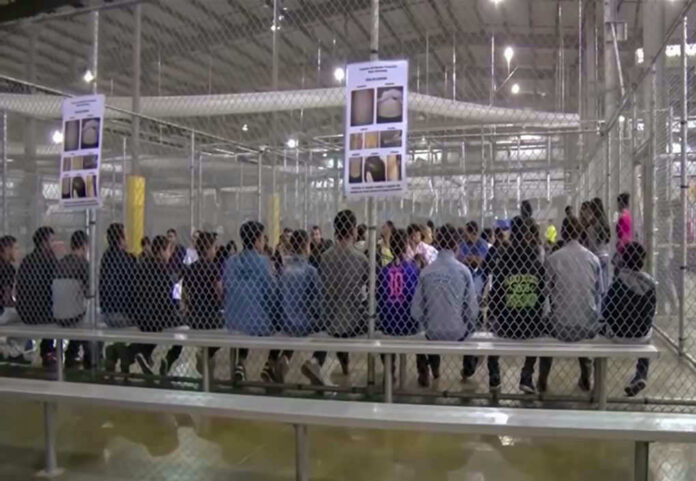
- ICE plans to convert the building into a 1,500-bed processing facility for immigration detainees.
- City of Surprise officials said the federal government did not notify them before the purchase became public.
- Supporters see logistics-style efficiency; critics point to deaths in custody at existing Arizona detention sites and demand transparency.
A warehouse sale that landed like a thunderclap in Surprise
DHS finalized the purchase of a massive logistics warehouse in Surprise near major cross streets in the West Valley, then the news broke days later: ICE intends to turn it into a 1,500-bed processing facility. The building’s scale matters because it signals throughput, not a boutique operation. A structure compared to multiple football fields is built for flow: vehicles, inventory, personnel, and now, human intake and transfer.
The most politically combustible detail was not the price tag or square footage. It was the lack of local heads-up. Surprise officials said they had no communication from the federal government about the acquisition or its intended use. That vacuum creates the same reaction every community has when an outside authority moves first and explains later: residents fill in the blanks, activists assume the worst, and ordinary taxpayers ask who pays for downstream impacts.
Why 1,500 beds changes the math for Arizona
A 1,500-bed processing facility does not behave like a small detention unit. It behaves like an intake node in a larger enforcement network. Even if many detainees move quickly through interviews, screenings, hearings, or transfers, the headcount drives staffing, transport, medical services, and security. That scale also reshapes the political conversation: it feels less like routine law enforcement administration and more like infrastructure for an enforcement surge.
ICE has expanded detention capacity before, but the warehouse-to-facility pattern has attracted attention because warehouses already have the bones of high-volume operations. They sit near freeways, have huge indoor footprints, and can be adapted for controlled access. Reports in recent years described ICE scouting and repurposing sites in multiple states, with Arizona repeatedly in the mix. Surprise, with growth and open commercial zoning, fits the practical checklist.
The funding and the mandate behind the purchase
ICE attributed the broader expansion push to funding provided through a recent spending bill, framing the Surprise purchase as part of a larger operational plan rather than a one-off local decision. That matters because it points to an institutional commitment: money first, facilities second, staffing and policy execution third. For readers tired of politics-as-theater, this is politics-as-construction, which tends to outlast the news cycle.
The Trump administration’s enforcement ramp has also produced legal friction elsewhere, including disputes over compliance with court orders and concerns about who gets swept up. Those court fights function like a warning label for any new large facility: procedures, documentation, and detainee classification must stay tight, or a high-capacity center becomes a high-capacity source of litigation. Nothing about the Surprise plan automatically implies misconduct, but scale magnifies mistakes.
Local unease meets federal authority
Federal immigration enforcement does not require a city council vote, and that reality sits at the core of the tension. Surprise can manage zoning context, emergency services coordination, and community communications, but it cannot veto federal detention strategy. That asymmetry is why transparency becomes the bargaining chip local leaders reach for. When agencies operate with minimal local engagement, residents interpret it as either secrecy or indifference, neither of which builds public trust.
Rep. Greg Stanton, a Democrat representing the area, said he worried the warehouse purchase signaled disruptive enforcement activities in communities. State Sen. Annelise Ortiz went further, using inflammatory language and citing prior deaths in custody at Arizona detention centers. Readers should separate rhetoric from verifiable operational questions. The strongest critique is not name-calling; it’s whether oversight, medical care, and lawful processing keep pace with a facility designed for volume.
The human-risk argument: deaths in custody and medical care
Critics anchor their objections in Arizona’s existing detention record, including reported increases in deaths in custody at facilities such as Florence and Eloy. DHS has said detainees receive proper care and have access to legal and medical services. Both claims can be true in the abstract while still leaving a practical question unanswered: what happens when capacity spikes? Processing centers face pressure points at intake, triage, and mental-health screening, where delays can turn dangerous.
Conservatives who favor enforcement still have a common-sense stake here. The government must enforce immigration law, but it also must run secure, orderly facilities that do not create avoidable tragedies or lawsuits that cripple enforcement credibility. A well-run processing site reduces chaos at the border and discourages illegal entry; a scandal-plagued site does the opposite by handing opponents the perfect talking point and tying up operations in court.
What to watch next in Surprise
ICE had not publicly detailed a retrofitting timeline as of early February 2026, and the city said communication still lagged. That gap invites three near-term watch items: permitting and construction activity, vendor contracting for security and medical services, and the operational definition of “processing” versus longer-term detention. The label matters because it sets expectations for average length of stay, transport frequency, and community impact.
ICE Drops $70 MILLION On Massive Arizona Warehouse To DETAIN and DEPORT Illegals https://t.co/azPR0ZXWEU As Trump cranks up the deportation machine, Arizona Dems meltdown over a new mega-facility.
— m o d e r n i t y (@ModernityNews) January 31, 2026
The bigger question sits above the warehouse itself: will this facility become a model of disciplined, legally precise enforcement, or a flashpoint that hardens distrust? The answer depends less on speeches and more on boring details that decide everything: intake standards, record accuracy, medical responsiveness, access to counsel, and whether Washington treats local coordination as optional. A $70 million building is easy to buy; legitimacy is harder to build.
Sources:
ICE is planning a 1,500-bed processing facility in a Surprise warehouse it just bought for $70M.
Rep. Greg Stanton says he’s concerned about the large warehouse ICE bought in Surprise