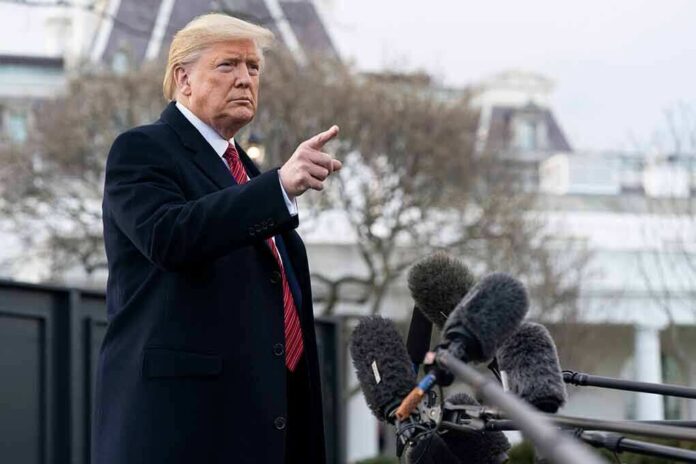
The escalating tension between the U.S. and Denmark over Greenland is a geopolitical chess game that leaves the world on edge.
Story Snapshot
- President Trump’s 2026 threats to acquire Greenland stir global tension.
- Denmark and Greenland firmly reject the notion of U.S. takeover.
- U.S. senators plan diplomatic visits to Denmark as military options loom.
- NATO allies worry about alliance strain and potential conflict.
The Greenland Conundrum
In early 2026, President Donald Trump reignited a geopolitical storm by renewing his pursuit of Greenland. This time, the rhetoric has escalated to include potential military action, a move that has significantly strained relations with Denmark, Greenland, and NATO. Trump’s justification centers around national security concerns, with Russia and China’s Arctic activities cited as immediate threats. Despite this, Denmark and its autonomous territory Greenland remain resolute in their refusal to consider any such acquisition, reaffirming their sovereignty.
Trump’s ambitions for Greenland are not novel. The idea dates back to his first term in 2019, when he floated the concept as a “real estate deal,” only to face rejection from Danish Prime Minister Mette Frederiksen. Fast forward to his second term, and the narrative has shifted from purchase to potential force, with Trump’s statements suggesting a “one way or another” approach. This shift has prompted Denmark to enhance its diplomatic efforts, sending envoys to Washington, while U.S. senators prepare to visit Denmark in a bid to de-escalate tensions.
Strategic Interests and Diplomatic Strain
Greenland’s strategic importance cannot be overstated. Home to significant Arctic resources and the U.S. Thule Air Base, the region is a focal point in the geopolitical tug-of-war with Russia and China. Trump’s administration argues that control over Greenland is essential for maintaining a strategic advantage in the Arctic. However, this pursuit risks undermining NATO’s cohesion, as Denmark and its allies resist any moves that compromise Greenland’s autonomy. The situation is further complicated by the mixed signals from the U.S. administration, with Secretary of State Marco Rubio reportedly favoring a purchase over invasion, despite Trump’s aggressive stance.
The diplomatic fallout from these threats is palpable. Denmark has already summoned the U.S. ambassador, and Greenland has publicly rejected the rhetoric. The U.S. administration’s consideration of military options has only intensified the diplomatic strain. As Danish and Greenlandic envoys prepare for discussions with U.S. officials, the world watches with bated breath, aware that the outcome could set a precedent for international relations in the Arctic.
NATO and International Implications
NATO’s role in this unfolding drama is pivotal. As an alliance bound by mutual defense commitments, NATO’s stability is threatened by the prospect of a U.S. military intervention in Greenland. The alliance’s European members have already issued statements backing Denmark’s position, emphasizing the importance of maintaining Greenland’s sovereignty. The potential for an alliance rupture looms large, with experts warning that any aggressive U.S. move could isolate the country from its NATO partners.
The implications of the Greenland saga extend beyond the immediate players. For Greenlanders, the threat of U.S. intervention raises concerns about sovereignty and self-determination. For the U.S., the potential economic and military costs of such an endeavor are significant. Moreover, the broader geopolitical landscape is at stake, as any conflict in the Arctic could have far-reaching consequences for global security and resource competition.