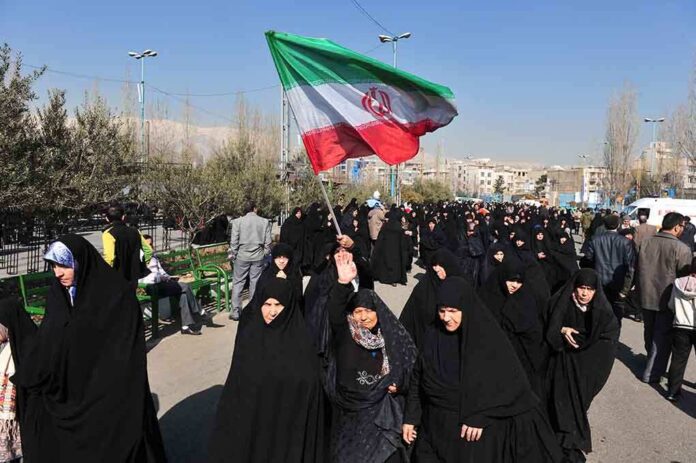
Iranian protesters chant “Neither Gaza nor Lebanon, my life for Iran,” turning guns on their own regime while rejecting foreign proxies that drain the nation’s blood and treasure.
Story Snapshot
- Protests exploded from Tehran’s Grand Bazaar strikes on December 28, 2025, into a nationwide uprising spanning 110 cities by January 6, 2026.
- Security forces killed 16-32 protesters and arrested nearly 1,000, including hospital raids and firing on civilians.
- Chants demand regime change with “Death to Khamenei” and nationalist rejection of Iran’s proxy wars abroad.
- Bazaar merchants and women lead the charge, signaling elite fractures and deepening crisis.
- Regime’s brutal crackdown reveals vulnerability after Khamenei’s speech hardened response.
Protests Ignite in Tehran’s Grand Bazaar
Merchants shut down Tehran’s Grand Bazaar on December 28, 2025, protesting skyrocketing inflation and shortages. Strikes spread rapidly to Isfahan, Shiraz, and Mashhad by December 30. Security forces deployed tear gas and live ammunition in Hamadan and Tehran, marking the violent start. Economic despair, fueled by sanctions and mismanagement, quickly morphed demands into political fury against Supreme Leader Ali Khamenei.
Protesters chanted “Neither Gaza nor Lebanon, my life for Iran,” explicitly rejecting the regime’s costly support for foreign proxies like Hezbollah and Hamas. This slogan captured a core grievance: Iran’s resources squandered abroad while citizens starved at home. From conservative viewpoints, such nationalism aligns with common sense self-preservation over ideological overreach.
Nationwide Uprising Challenges Regime Control
By December 31, 2025, authorities ordered shutdowns across 21 provinces, citing winter weather as cover to halt protests. Rallies erupted in Isfahan and Kermanshah with “Death to the dictator” echoing through streets. Funerals for early victims turned into anti-regime demonstrations by January 2, involving over 10 cities. Protests hit 179 events across 24 provinces by January 5.
Women played pivotal roles, leading sit-ins at the Grand Bazaar on January 6 and confronting security forces. Bazaar merchants, a traditional regime pillar, withheld gold and currency trades, crippling commerce. This elite dissent, layered with workers and students, eroded the regime’s base faster than social media could spread footage despite internet controls.
Regime’s Violent Crackdown Escalates
Security forces fired live rounds, killing at least 16 by January 3 and 32 confirmed by January 6. Arrests topped 1,000, including minors, with raids on hospitals in Ilam province to seize wounded protesters. Clashes intensified as demonstrators hurled Molotov cocktails and fired rifles in response. Khamenei’s January 4 speech shifted tactics from restraint to full coercion.
The IRGC and Basij militias dispersed Tehran Bazaar sit-ins with tear gas, turning markets into war zones. Protesters vowed “This year is the year of sacrifice, Seyed Ali will be overthrown.” Facts show regime survival hinged on suppression, but analysts note suppression failures signal cracks, resonating with conservative emphasis on accountable governance over tyranny.
Historical Echoes and Future Stakes
Iran’s unrest traces to 1979 Revolution fallout, mirroring 2009 Green Movement, 2019 fuel riots (1,500 killed), and 2022 Mahsa Amini protests (500+ deaths). Bazaar strikes historically precede elite revolts. Current wave blends economic paralysis—fruit markets halted, trade disrupted—with political overthrow calls, straining IRGC amid foreign commitments.
Opposition groups like NCRI and HRANA tally deaths and events, amplifying via exiled networks. U.S. State Department voiced concern over violence, but protesters spurn foreign meddling narratives peddled by Tehran. Long-term, bazaar and women’s involvement could destabilize the regime if strikes persist, forcing resource diversion from proxies.
Sources:
Iran has been shaken by a series of protests over the past 50 years. Here’s a look at them