The world’s most protected spaces became killing fields when paramilitary forces stormed Sudan’s last functioning hospital in Al-Fashir, executing hundreds of patients, doctors, and civilians in what may be one of the most brazen war crimes of the 21st century.
Story Overview
- Rapid Support Forces raided Saudi maternity hospital in Al-Fashir, killing 460-500 civilians including patients and medical staff
- Several “hero” doctors who stayed to treat patients under siege conditions were abducted and held for ransom
- Attack occurred during RSF’s final assault on Al-Fashir, the last government stronghold in Darfur
- Hospital massacre represents unprecedented violation of international humanitarian law protecting medical facilities
- Communications blackout suggests actual death toll across the city likely reaches tens of thousands
The Last Stand of Al-Fashir’s Medical Heroes
For months leading up to the October 2025 massacre, doctors at the Saudi maternity hospital had transformed from healers into heroes. While 260,000 civilians remained trapped in Al-Fashir under siege conditions, these medical professionals refused evacuation offers, choosing instead to serve patients in increasingly desperate circumstances. Their decision to stay would ultimately cost many their lives when RSF forces launched their final assault on October 26.
The World Health Organization confirmed that when RSF paramilitaries raided the facility on October 27-28, they systematically executed patients, companions, and medical staff alike. Witnesses described scenes of unimaginable brutality as forces moved through wards, killing indiscriminately. Those doctors who survived the initial assault faced a different horror: abduction and ransom demands from the very forces they had risked their lives opposing through their humanitarian service.
Strategic Importance of Al-Fashir in Sudan’s Civil War
Al-Fashir’s fall represents far more than a tactical victory for the RSF in their ongoing civil war against the Sudanese Armed Forces. As the capital of North Darfur and the last SAF stronghold in the region, the city had become a symbol of resistance against the same forces that perpetrated genocide in Darfur two decades earlier. The RSF, evolved from the notorious Janjaweed militias, sought not just military control but complete psychological dominance over the population.
The city’s transformation from refuge to killing field illustrates the calculated nature of RSF strategy. By October 2025, Al-Fashir housed 1.5 million people, with 250,000 concentrated in the city core. This concentration of civilians, many already displaced from previous violence, created both a humanitarian crisis and a strategic target. When SAF forces withdrew after the October assault, they left behind a defenseless population that had nowhere left to run.
International Law Violations and War Crime Classifications
The deliberate targeting of a medical facility elevates this massacre beyond typical wartime violence into clear war crime territory. International humanitarian law explicitly protects hospitals, medical personnel, and patients during armed conflict. The systematic execution of doctors, patients, and civilians within a medical facility represents multiple violations of the Geneva Conventions and Rome Statute governing crimes against humanity.
Human rights experts note the premeditated nature of the attack distinguishes it from collateral damage scenarios. The RSF forces specifically targeted the hospital, methodically killed protected persons, and then kidnapped medical staff for ransom. This pattern suggests command-level planning rather than battlefield chaos, making it particularly egregious under international legal frameworks designed to protect civilians during wartime.
The Broader Darfur Genocide Context
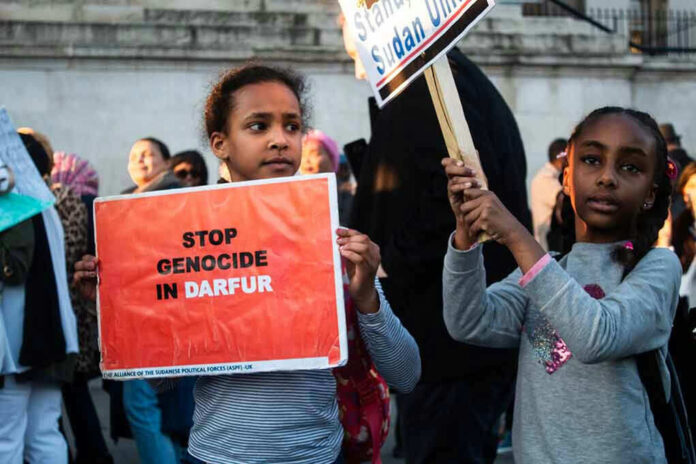
This hospital massacre cannot be separated from the broader pattern of RSF atrocities across Darfur since 2003. The same forces responsible for the current killings evolved directly from Janjaweed militias that committed genocide against Darfur’s African ethnic groups two decades ago. Current RSF leader Mohamed Hamdan Dagalo, known as “Hemedti,” participated in those earlier campaigns before formalizing his forces into the RSF in 2013.
Yale University’s Humanitarian Research Lab estimates the current Al-Fashir massacre has killed tens of thousands citywide, with the hospital attack representing just one concentrated atrocity within a larger systematic campaign. The communications blackout imposed during the assault suggests RSF forces understood the international implications of their actions and sought to limit documentation. However, multiple independent sources including WHO, Médecins Sans Frontières, and local resistance committees have corroborated the scale and nature of the killings.