patriotnewsdaily.com — The man who opened fire near the White House was not a ghost in the crowd but a known risk on a slow, predictable trajectory toward tragedy.
Story Snapshot
- A 21-year-old with prior White House run-ins opened fire at a security checkpoint before Secret Service agents killed him.
- President Donald Trump was inside the White House, unharmed, while the complex went into brief lockdown.[2][7]
- The gunman had a reported history of mental illness and delusional claims, yet still reached the perimeter again.[1][2][7]
- A bystander was wounded, raising hard questions about risk, response, and what “contained” really means.[2][7]
A Gunfight At The Edge Of The Most Guarded Building On Earth
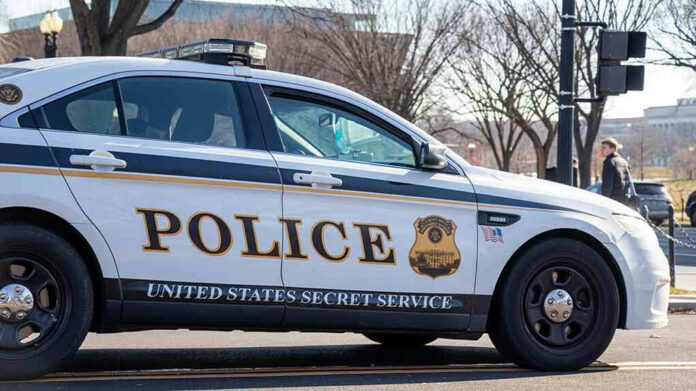
Gunfire started not inside the White House, but at the edge of its defensive bubble, where tourists and staff cross paths every day. Shortly after 6 p.m., at 17th Street and Pennsylvania Avenue, a young man reportedly pulled a handgun from his bag at a Secret Service checkpoint and began shooting. Agents answered with a barrage of fire, dropping him and ending the threat within seconds.[2][4][5] That speed saved the president. It did not prevent collateral damage.
Authorities say the gunman was 21-year-old Nasire Best, a Maryland or Washington, D.C. resident whose name had already crossed Secret Service radar.[1][3][7] Earlier contacts included flagging down agents, making threats, and entering restricted areas near the White House, behavior that triggered a stay-away order and even psychiatric treatment after a previous arrest tied to the complex.[1][2][5][7] This was not a man who suddenly snapped in obscurity. This was a repeat visitor to the outer ring of presidential security.
Trump Safe, But The Illusion Of Total Control Took A Hit
President Donald Trump was inside the White House when rounds started cracking through the air. Agents moved quickly, the building went into lockdown, and reporters on the North Lawn dove for cover as shots echoed off the stone and glass of the executive compound.[2][5][7] Officials later stressed that no protectee was harmed, no Secret Service officer was injured, and operations continued.[2][4][5][7] That message reassures, but it also carefully narrows what counts as a “problem.”
A bystander was shot during the exchange, and investigators were still determining whether that wound came from the gunman or from crossfire.[2][5][7] That unresolved fact matters. Citizens accept that the president requires aggressive protection, but they also assume the government can shield them from the fallout of those gunfights. A security plan that stops the assassin but sends a stray round into a passerby is technically successful yet morally and politically fragile.
The Troubling Path From “Jesus Christ” To Gunfire
Best’s earlier behavior paints a portrait of a disturbed young man circling the same symbolic target. Court-linked reporting and television transcripts describe an earlier incident where he told officers he was Jesus Christ and wanted to be arrested near the White House.[1][2][7] Media outlets quote law enforcement sources who say he had documented mental health conditions and had spent time in a psychiatric facility after a prior encounter on or near the grounds.[1][2][4][5][7] That is more than a vague “troubled loner” cliché.
Yet for all the talk about his mental state, the public has not seen underlying medical records, formal diagnostic reports, or full court evaluations supporting the labels now repeated as fact.[1][2][7] From a common-sense, conservative perspective, that gap cuts both ways. It warns against turning every crime story into a therapeutic drama, but it also highlights a system that managed to identify danger on paper, then still allowed the same man to come back with a gun.
Security Success, Security Failure, Or Something In Between?
Officials and many outlets frame the episode as a contained scare: perimeter checkpoint, quick response, president safe, shooter dead, scene secured, lockdown lifted.[1][2][7] That framing is not false; agents did exactly what taxpayers expect once the shooting started. But the same record also shows a young man known to authorities who returned to the most protected patch of real estate in America with a handgun and a history. That is not “everything worked perfectly.” It is “the last layer worked; earlier layers did not.”
UPDATE: CIVILIAN EXPECTED TO RECOVER AFTER BEING SHOT DURING SHOOTING NEAR WHITE HOUSE: MPD has released information stating the decedent has been identified as 21 year old Nasire Best, of Dundalk, MD. An adult male civilian that was struck by gunfire is receiving treatment and… pic.twitter.com/SUbxPn3pyi
— NEWS FROM THE CONCRETE (@NFTC_News) May 24, 2026
Reporters describe three shots from the suspect and as many as twenty to thirty rounds in response, with shell casings scattered where tourists usually pose for photos.[2][4][5] That volume reflects the modern reality of protective tactics: overwhelming force to end the threat fast. From a law-and-order vantage point, no agent should hesitate when the commander in chief may be at risk. But citizens have a right to demand clarity about rules of engagement, training, and what happened to that wounded bystander.[2][7]
Why This One Shooting Should Change How We Read The News
The Best case also exposes how lightning-fast media framing can lock in a narrative before facts harden. Within hours, headlines settled into two grooves: “mentally ill lone actor known to Secret Service” and “another assassination attempt on Trump.”[1][2][4][5][7] Both contain slivers of truth. Both risk distracting from harder, less dramatic questions about prior incidents, stay-away orders, mental-health interventions, firearm acquisition, and video evidence that has not yet been released.
Americans over 40 have lived through enough “developing stories” to know the pattern. First comes the panic, then the reassuring press conference, then a slow leak of uncomfortable details. The White House shooting fits neatly into that script. Serious citizens should reserve judgment until after-action reports, court records, and surveillance footage surface. Respect for the agents who ran toward gunfire and common-sense skepticism about institutional spin can coexist. In a republic, they must.
Sources:
[1] Web – Maryland man, 21, involved in White House shootout …
[2] YouTube – 21-year-old suspect dead after opening fire | FOX 10 Phoenix
[3] YouTube – New photo shows man accused of starting shootout at …
[4] YouTube – White House Shooting: 21-Year-Old Nasire Best Identified …
[5] YouTube – Another Assassination Attempt on Trump? 21-Year-Old …
[7] YouTube – White House reporter ducks for cover as gunman opens …
© patriotnewsdaily.com 2026. All rights reserved.