A controversial federal intervention in Washington D.C. challenges local autonomy, igniting public debate over constitutional rights.
Story Overview
- Federal checkpoint set up in D.C.’s nightlife district under Trump’s emergency powers.
- Public protests and arrests highlight tensions between federal and local authorities.
- Concerns arise over civil liberties and the impact on businesses.
- Potential precedent for future federal intervention in urban policing.
Federal Intervention in D.C.’s Nightlife District
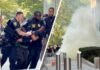
In a bold assertion of federal authority, President Donald Trump announced the federalization of Washington D.C.’s police force on August 11, 2025. This decision, enacted under Section 740 of the District of Columbia Home Rule Act, grants the federal government emergency control for 30 days. On the night of August 13, federal agents and local police set up a checkpoint along the bustling 14th Street NW and U Street corridor, a popular nightlife hub. The move was met with significant protest and public outcry, with demonstrators questioning law enforcement motives and urging drivers to avoid the area.
The checkpoint, intended to address rising crime rates in the district, was operational until 11 p.m. on August 14, when it was shut down amidst ongoing protests and arrests. Over 100 protesters gathered in the area, leading to 43 arrests, up from two dozen the previous night. Federal agents, including personnel from Homeland Security, DEA, FBI, and the National Guard, were deployed across multiple neighborhoods, including Navy Yard and Massachusetts Avenue, illustrating the scale of federal involvement.
Public Reaction and Civil Liberties Concerns
The federal intervention in D.C. has sparked a heated debate over civil liberties and the balance of power between federal and local authorities. Protesters have publicly challenged law enforcement motives and questioned the transparency of the operation. The lack of immediate comment from the Metropolitan Police Department has further fueled public skepticism and concern. The impact on local businesses, particularly those in the nightlife sector, has been significant, with economic disruptions and heightened public anxiety.
Critics argue that the federal takeover represents an overreach that threatens civil liberties and sets a dangerous precedent for future federal interventions in urban policing. Civil liberties advocates warn of a “chilling effect” on public assembly and the nightlife economy, while urban policy analysts highlight the risks of undermining local governance and trust.
The Broader Implications of Federal Control
The federal control of D.C.’s police force raises questions about the long-term implications of such actions. While supporters argue that federal intervention was necessary to restore order amidst rising crime rates, opponents contend that it erodes civil rights and local autonomy. The situation in D.C. highlights the ongoing tension between federal and local authorities, with potential legal and political challenges to federal authority looming on the horizon.
The recent events in D.C. have reignited the debate over federal versus local control, with implications for urban policing strategies and federal-local law enforcement cooperation. As the situation continues to unfold, the balance between public safety and civil liberties remains a critical issue for policymakers and communities alike.
Sources:
Federal agents set up checkpoint in popular DC nightlife area
Protests erupt as federal agents establish checkpoint in DC nightlife