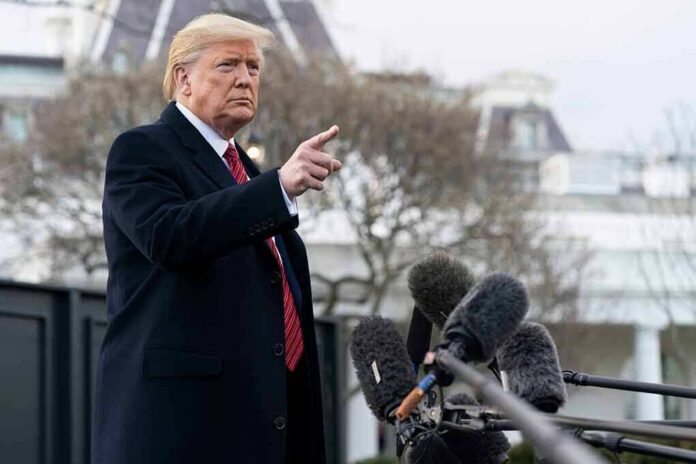
Donald Trump stunned a reporter with a brutal dismissal of her question on Iran strike threats, exposing raw geopolitical brinkmanship amid Iranian protests claiming over 500 lives.
Story Snapshot
- Trump threatens military strikes on Iran for its deadly crackdown on protesters, claiming the regime reached out for negotiations.
- Protests erupted in late December 2025 over economic collapse, spreading nationwide with at least 544 deaths reported by January 12, 2026.
- Ayatollah Khamenei fires back with a symbolic X post depicting Trump’s downfall, while Iran’s Foreign Minister blames U.S. and Israel.
- Exiled Crown Prince Reza Pahlavi urges protesters to escalate toward regime overthrow.
- U.S. weighs strikes against non-kinetic options like sanctions and cyber aid, reviving maximum pressure tactics.
Protests Ignite Iran’s Economic Powder Keg
Protests exploded in Tehran late December 2025 after the rial’s devaluation fueled rampant inflation. Demonstrators shifted from economic grievances to anti-regime chants, echoing 2019 unrest that killed 1,500 and 2022’s Mahsa Amini uprising. Iran’s theocratic rulers deployed Basij militias and imposed internet blackouts to crush coordination. By January 10, 2026, unrest gripped cities nationwide in a nation of 90 million.
Trump seized the moment Saturday, posting support for protesters and warning against violent suppression. This marked a revival of his 2017-2021 maximum pressure campaign after withdrawing from the JCPOA nuclear deal. Unlike the 2020 Soleimani strike over nuclear tensions, these threats tie directly to domestic revolt, amplifying U.S. leverage.
Trump Delivers Strike Ultimatum
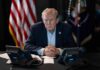
Sunday, January 11, 2026, Trump escalated during a meeting with oil executives and aboard Air Force One. He declared the U.S. considers “very strong options,” promising unprecedented retaliation if Iran continues killing demonstrators. Trump asserted Iran initiated contact for talks following his warnings, a claim underscoring perceived regime weakness. A reporter’s query on the threats drew Trump’s sharp rebuke, branding it a “stupid question” in a moment capturing his unfiltered style.
Ayatollah Ali Khamenei countered with an X post showing a crumbling Trump statue, captioned “This one too will be overthrown.” Iranian Foreign Minister Abbas Araghchi labeled protests a “terrorist war” orchestrated by the U.S. and Israel. Exiled Crown Prince Reza Pahlavi called for targeting regime institutions, predicting international backing.
Regime’s Defiant Crackdown and Death Toll
Monday, January 12, 2026, reports confirmed 544 protest-related deaths. Araghchi insisted unrest fell “under control,” promising internet restoration. Revolutionary Guard Corps and Basij forces enforced repression, positioning themselves as potential post-Khamenei power brokers. Protesters, disorganized without online tools, faced brutal force amid claims of Mossad infiltration.
Trump doubled down, stating Iran “called yesterday” but the U.S. might strike before any meeting. This positions negotiations as secondary to action, aligning with America First priorities of weakening adversaries without endless wars. Facts support Trump’s negotiation claim across sources, bolstering its credibility against Iranian denials.
Strategic Risks of U.S. Intervention
U.S. military and national security aides debate strikes versus cyber operations, sanctions, or Starlink internet aid for protesters. Chatham House analysis warns strikes could rally Iranians around the flag, boosting the regime, or distract forces from repression. Non-kinetic measures offer safer paths to erode theocracy without chaos.
Long-term, regime collapse risks IRGC hardliner rule, mirroring Venezuela’s failures but on Iran’s larger scale. Oil markets jitter from threats discussed with executives. Protesters gain hope from U.S. rhetoric, yet face backlash. Common sense favors pressure exposing Iran’s fragility over rash escalation, prioritizing American security.
Sources:
Would Trump’s Threatened Strikes Help Iran’s Protestors—or Boost the Regime?
Iranian leader, Trump trade threats amid activists’ protest deaths