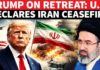
President Trump has threatened to obliterate an entire nation if diplomatic negotiations fail, marking a dangerous escalation in presidential rhetoric that combines profanity-laden social media posts with shifting deadlines and contradictory strategic messaging.
Story Snapshot
- Trump issued repeated ultimatums demanding Iran reopen the Strait of Hormuz or face total destruction of energy infrastructure and the country itself
- The president’s March 21st initial 48-hour deadline has been extended multiple times, now set for April 6th, undermining credibility of threats
- Trump’s statements oscillate between claiming the U.S. could unilaterally seize control of the strait and take Iranian oil versus saying responsibility belongs to other countries
- The Strait of Hormuz controls one-third of global maritime oil trade, making any military action economically catastrophic worldwide
The High-Stakes Gamble Over the World’s Oil Jugular
The Strait of Hormuz represents far more than a shipping lane. This narrow passage between the Persian Gulf and Gulf of Oman serves as the transit point for roughly one-third of all seaborne petroleum. Iran’s geographic position grants it enormous leverage over this chokepoint, which explains why Trump frames reopening it as a non-negotiable demand. What remains unclear is whether Iran actually closed the strait or merely threatened to do so. The ambiguity surrounding the precipitating event makes Trump’s escalating threats all the more puzzling to international observers and energy markets alike.
Trump’s March 21st ultimatum established a pattern that would repeat throughout the crisis. He demanded Iran open the strait within 48 hours or face bombing of its energy infrastructure. When that deadline passed, Trump claimed talks were progressing and pushed the timeline back. This cycle repeated until April 4th, when he again invoked the 48-hour framework, warning that “all hell will rain down on them.” The April 6th deadline now looms as the latest iteration of threats that have lost potency through repetition and revision.
When Presidential Language Abandons Diplomatic Convention
Trump’s public statements about Iran abandoned the measured terminology typically employed in international crises. His declaration that Iran will be “living in hell” and his assertion that “we’re blowing up the whole country” represent departures from traditional presidential communication during geopolitical standoffs. This profanity-laden, theatrical approach raises questions about whether such rhetoric serves American strategic interests or merely satisfies domestic political appetites. The inflammatory language makes diplomatic off-ramps more difficult to construct and increases the probability that miscalculation by either side could trigger unintended military confrontation.
The president’s contradictory messaging further complicates the situation. Trump stated the U.S. could “easily open it and take the oil for itself,” suggesting unilateral military action and resource seizure. Yet he simultaneously claimed “it is up to other countries,” implying American disengagement from responsibility for the strait’s security. These incompatible positions leave allies, adversaries, and markets uncertain about actual U.S. intentions. Such strategic ambiguity might serve as deliberate unpredictability, or it might simply reflect incoherent policy formation within the administration.
The Credibility Cost of Moving Deadlines
Red lines only function as deterrents when adversaries believe crossing them triggers consequences. Trump’s repeated deadline extensions erode the credibility of his threats, teaching Iran that ultimatums represent opening bargaining positions rather than final warnings. This dynamic creates perverse incentives for Iranian leadership to wait out each deadline, expecting another extension. The pattern also signals to other nations that American threats under this administration may lack follow-through, potentially emboldening adversaries in future conflicts beyond the Persian Gulf region.
Analyst commentary has criticized Trump’s approach, particularly threats to strike civilian infrastructure. Such targeting would violate international laws of armed conflict and potentially constitute war crimes, depending on execution. The threats also demonstrate questionable understanding of Iranian political dynamics. Iran’s theocratic regime has proven resilient against external pressure throughout decades of sanctions and isolation. Bombing energy infrastructure might rally Iranian citizens around their government rather than prompting capitulation, especially if strikes cause civilian casualties or economic devastation affecting ordinary people rather than regime leadership.
The Global Stakes Beyond Two Nations
Any military confrontation in the Strait of Hormuz would immediately spike oil prices worldwide, creating inflationary pressures that hurt American consumers and potentially trigger recession. Regional allies including Saudi Arabia and the United Arab Emirates would face difficult choices about supporting U.S. military action that could invite Iranian retaliation against their own energy infrastructure. Israel might view weakening Iran as strategically beneficial but could become a target for Iranian proxies in Lebanon and elsewhere. The complex web of interests and potential escalation paths makes Trump’s casual threats about “blowing up the whole country” deeply irresponsible from a strategic perspective.
The absence of visible diplomatic groundwork preceding these threats raises additional concerns. Effective brinkmanship requires coordination with allies, clear communication channels with adversaries, and contingency planning for multiple scenarios. Trump’s approach appears to prioritize public statements over behind-the-scenes negotiation, potentially boxing both nations into corners where backing down appears as weakness. The April 6th deadline approaches with no indication of Iranian compliance or American military mobilization visible to open sources, suggesting either secret negotiations are progressing or another deadline extension looms, further damaging American credibility in the region and beyond.