Imagine waking up in a country where the man who inspired an assault on Congress returns to power—and on his first day, erases the consequences for those who stormed the Capitol in his name.
Story Snapshot
- Donald Trump issued blanket pardons for nearly 1,600 January 6 defendants on his first day back in office.
- Legal and political institutions were upended, with critics decrying the move as a dangerous abuse of power.
- The pardons reignited fierce debate about presidential authority and America’s commitment to the rule of law.
- Experts warn of long-term risks: emboldened political violence and eroding trust in democracy.
Trump’s First Day: A Pardon Power Unleashed
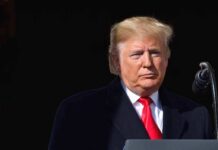
Donald Trump, having reclaimed the White House in January, delivered on a campaign promise that many dismissed as bluster—blanket clemency for those convicted or awaiting trial for the January 6 Capitol attack. Among nearly 1,600 recipients, two high-profile pardons stood out, sending shockwaves through legal and political circles. Trump justified the act as a “corrective to grave national injustice” and a gesture toward “national reconciliation,” but critics from the Justice Department, judiciary, and academia called it a brazen abuse of presidential power and an unprecedented threat to democratic norms.
Legal experts and federal prosecutors immediately warned that the mass pardon could undermine the rule of law and embolden future acts of political violence. The comparison to past controversial clemency—Nixon, Iran-Contra—fell flat in the face of the sheer scale and direct connection to an assault on Congress. Never before had a president used the pardon power to effectively nullify the consequences for an attempt to overturn an election through force.
The Anatomy of a Political Earthquake
The January 6 attack was already a defining event of a divided era, with hundreds prosecuted for crimes ranging from trespassing to conspiracy. Trump and his allies had long portrayed the defendants as “political prisoners,” vowing to pardon them if returned to power. The Biden Justice Department, meanwhile, pursued hundreds of cases with an eye toward accountability and deterrence. When Trump’s executive order landed, it did more than free prisoners—it upended ongoing trials, derailed sentences, and set off a flurry of legal motions from defense attorneys seeking to broaden the reach of clemency. Courts, however, pushed back, rejecting attempts to extend the pardons to unrelated offenses.
Congress responded with a cacophony of outrage and support. Some of Trump’s loyalists hailed the move as long-overdue justice, while opponents warned that it made a mockery of federal law enforcement and imperiled the foundations of American democracy. Tensions between the executive and judiciary escalated, as judges publicly criticized the rationale behind the pardons and legal scholars debated whether any constitutional guardrails remained around the pardon power itself.
Ripple Effects: Law, Order, and the Future of Democracy
Immediate impacts rippled through the justice system. Hundreds of defendants walked free or saw their sentences slashed. Morale among federal law enforcement and prosecutors plummeted. The message to future would-be insurrectionists became a central point of controversy: counterterrorism experts warned that the pardons could serve as a green light for political violence, signaling that loyalty to a president might trump the law itself. The episode also set a daunting precedent—a president using the clemency power not only for allies but for participants in an organized assault on the machinery of democracy.
Long-term, the move deepened polarization and distrust in institutions. Supporters saw vindication and strength; critics predicted a dangerous weakening of deterrence for crimes against the state. Legal scholars such as Randall Eliason labeled the pardons an abuse of power, while DOJ officials called the act personal retribution masquerading as policy. Congressional hearings and legal challenges continued for months, but the constitutional authority of the pardon ultimately prevailed—at least for now.
America’s Reckoning: What Comes Next?
The question now confronting America is not just about the legality of Trump’s pardons, but about the kind of country willing to accept them. Can political violence be normalized under the banner of “reconciliation”? What are the limits—if any—on a president’s power to rewrite the consequences of collective lawbreaking? The answers will shape not only the 2028 election but the future of American democracy itself.
The story of Trump’s January 6 pardons remains unfinished, its implications still rippling through courts, Congress, and the public square. What is certain: the boundaries of executive power, the resilience of the rule of law, and the meaning of accountability in a self-governing society have never felt more precarious—or more fiercely contested.
Sources:
Wikipedia: Pardon of January 6 United States Capitol attack defendants
DOJ: Clemency grants by President Donald J. Trump (2025-present)
Congressional Hearing Document: Legal implications of January 6 pardons