Five Republicans joined Democrats to block the censure of a Democrat accused of assaulting ICE officers, igniting outrage among conservatives who see this as yet another attack on law enforcement and constitutional order.
Story Snapshot
- The House voted 215-207 to table the censure resolution against Rep. LaMonica McIver, despite federal charges for allegedly assaulting ICE officers.
- McIver pleaded not guilty and claims the prosecution is politically motivated; the trial is set for November 10, 2025.
- Some Republicans broke ranks, fueling conservative frustration over perceived weakness on core issues like law enforcement and immigration.
- This rare federal indictment highlights deepening partisan conflict over immigration enforcement and congressional authority.
House Tables Censure Resolution Amid Charges Against McIver
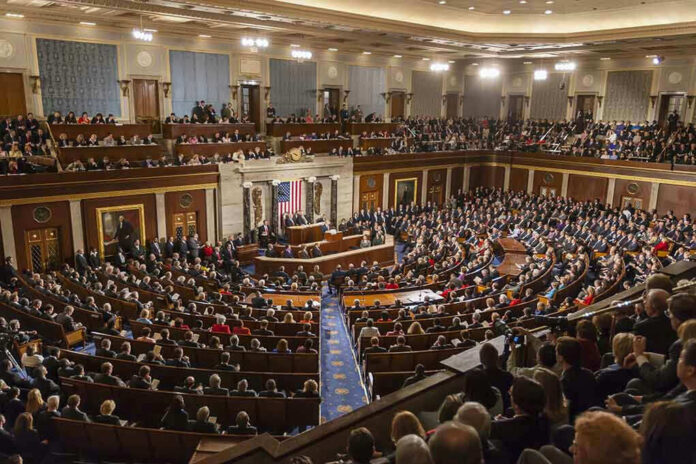
The U.S. House of Representatives voted to table, effectively killing, a resolution that would have censured Democratic Rep. LaMonica McIver for allegedly assaulting federal law enforcement during an oversight visit to the Delaney Hall ICE detention facility in Newark, New Jersey. The decision came after a close 215-207 vote, with several Republicans joining Democrats, sparking frustration among conservatives who view this as an abandonment of law enforcement and a retreat from accountability. McIver faces federal charges of assaulting, resisting, and impeding federal officers but maintains her innocence and claims political motivation is driving the prosecution.
Five Republicans Help Tank Effort To Censure Dem Who Allegedly Assaulted ICE Officers https://t.co/PZqQ4F7Zmq
— Daily Caller (@DailyCaller) September 3, 2025
The incident, which occurred on May 9, 2025, during a congressional oversight visit, has become a flashpoint in the ongoing debate over immigration enforcement and the proper boundaries of congressional authority. McIver was indicted on three federal counts in May and pleaded not guilty in court on September 3, 2025. Her trial is scheduled for November 10, 2025. The case is notable for its rarity: indictments of sitting members of Congress for alleged physical altercations with law enforcement during official duties are almost unheard of. The charges were brought by Alina Habba, a Trump-appointed U.S. Attorney for New Jersey, who has emphasized the need to protect federal officers and the rule of law.
Partisan Divisions and Political Fallout
The House’s decision to table the censure reflects both the deepening partisan divide in Congress and the growing tension over immigration policy and law enforcement. While most Republicans backed the censure, five broke ranks, prompting anger among conservative voters who expect strong support for law enforcement and a hard line on illegal immigration. This intra-party split exposes rifts within the Republican conference and raises questions about the party’s willingness to consistently defend core conservative values. For many, the failure to hold McIver accountable signals weakness on border security and undermines public confidence in the House’s commitment to constitutional principles and the rule of law.
McIver and her supporters claim the prosecution is a politically motivated effort to silence oversight of controversial ICE detention practices, further fueling partisan tensions. Meanwhile, law enforcement advocates argue that any assault on federal officers—especially by a lawmaker—demands accountability, regardless of political affiliation. The ongoing legal battle and the House’s refusal to formally censure McIver have energized both sides of the debate, with advocacy groups mobilizing supporters and increasing public scrutiny of congressional oversight at detention centers.
Broader Implications for Oversight and Law Enforcement
Legal experts emphasize the highly unusual nature of prosecuting a sitting member of Congress for actions taken during official duties, warning that such cases could have a chilling effect on congressional oversight if lawmakers fear prosecution for confrontational but legitimate activity. Others argue that no one, including elected officials, is above the law and that upholding accountability is essential for maintaining public trust. The outcome of McIver’s trial could set a precedent for the limits of congressional authority and the treatment of lawmakers who clash with federal law enforcement.
In the short term, McIver faces the possibility of removal from office if convicted, while Congress contends with heightened partisan animosity and renewed debate over the boundaries of oversight and enforcement. Long-term, this case may reshape how congressional visits to detention facilities are conducted and could influence future prosecutions of lawmakers. Conservative voters remain deeply concerned about perceived attacks on law enforcement and the erosion of traditional values, especially when some in their own party appear unwilling to stand firm in defense of these core principles.
Sources:
Rep. LaMonica McIver pleads not guilty to charges after ICE detention facility visit – ABC News
House rejects effort to censure New Jersey congresswoman accused of assault – Greenwich Time