America’s first pope just declared that God refuses to hear the prayers of wartime leaders with blood on their hands, and the timing couldn’t be more provocative.
Story Snapshot
- Pope Leo XIV told tens of thousands in St. Peter’s Square that God rejects prayers of leaders who wage war and “stain their hands with blood”
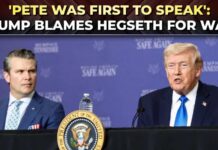
- The Palm Sunday statement directly challenges U.S. Defense Secretary Pete Hegseth’s Christian justifications for joint U.S.-Israel strikes on Iran
- As history’s first U.S.-born pope, Leo’s forceful condemnation creates unprecedented tension between American political and religious authority
- The remarks intensify weeks of papal calls for an immediate ceasefire in the two-month-old Iran conflict
- Leo’s statement returns Catholic teaching on just war to center stage during Holy Week’s traditional focus on Christ’s nonviolence
A Pope Who Challenges His Own Country
Pope Leo XIV stood before massive crowds in St. Peter’s Square on Palm Sunday and delivered words that cut straight to the heart of a brewing controversy. The pontiff didn’t mince words about leaders who invoke divine blessing while ordering military strikes. “This is our God: Jesus, the King of Peace, who rejects war, whom no one can use to justify war,” Leo declared. His target was unmistakable: political figures wrapping their military decisions in prayers and scriptural language while bombs fall.
The Pope’s statement carries particular weight because Leo himself is American, the first U.S.-born pontiff in Catholic history. He succeeded Pope Francis after the beloved predecessor died following complications from double pneumonia. Now Leo faces the delicate position of spiritually leading 1.3 billion Catholics worldwide while his homeland engages in military operations that he finds morally indefensible. The tension between national origin and universal spiritual authority creates a dynamic unlike any previous papal tenure.
When Prayer Becomes a Political Weapon
The catalyst for Leo’s forceful Palm Sunday homily traces back to February 28, when U.S. Defense Secretary Pete Hegseth invoked Christian rhetoric to justify joint American-Israeli strikes on Iran. Hegseth prayed publicly for “overwhelming force” as military operations commenced. By the time Palm Sunday arrived, the conflict had entered its second month with no resolution in sight. Pope Leo had watched this unfold with increasing alarm, issuing repeated calls for ceasefire and condemning aerial bombardment of civilian areas.
Leo’s biblical citation carried unmistakable rebuke: “Jesus does not listen to the prayers of those who wage war, but rejects them, saying: ‘Even though you pray much, I will not listen to you; your hands are full of blood.'” The Pope wasn’t simply offering theological commentary. He was directly challenging the legitimacy of wrapping military aggression in Christian language. For Catholics wrestling with the moral dimensions of modern warfare, their spiritual leader drew a bright line that leaves little room for interpretation.
The Strategic Timing of Holy Week
Leo chose Palm Sunday deliberately. This liturgical moment commemorates Christ’s peaceful entry into Jerusalem, when crowds waved palm branches and expected a conquering king. Instead, Jesus rode a humble donkey and within days faced crucifixion rather than take up arms. The entire week focuses on Christ’s rejection of violence even when faced with death. By positioning his condemnation of war at this precise moment, Leo amplified the theological power of his message beyond what any ordinary Sunday homily could achieve.
The Pope’s critics might argue that just war doctrine, a centuries-old Catholic teaching, permits defensive military action under strict conditions. They’re not wrong that the tradition exists. But Leo’s statement suggests that modern political leaders habitually abuse this doctrine, claiming divine sanction for aggressive operations that fail basic moral tests. His insistence that Jesus “cannot be invoked to justify war” challenges the casual invocation of Christianity to legitimize national security decisions that result in civilian casualties.
When Spiritual Authority Confronts Political Power
The standoff between Pope Leo and American political leadership exposes a fundamental question: who speaks with authority about God’s will regarding warfare? Defense Secretary Hegseth represents elected civilian leadership directing military operations in what officials frame as national defense. Pope Leo represents apostolic succession stretching back two millennia, claiming unique authority to interpret Christian teaching. When these two forms of authority collide over something as consequential as war, Catholics face genuine tension about where their ultimate loyalty belongs.
Pope Leo says God rejects prayers of leaders who wage war, have "hands full of blood"https://t.co/UbrR17TvCJ
— Human Events (@HumanEvents) March 29, 2026
Leo’s position forces uncomfortable questions for Christians who support robust military responses to perceived threats. If God genuinely rejects the prayers of wartime leaders, what does that mean for soldiers following orders? For citizens supporting military action? For religious leaders who bless troops and weaponry? The Pope offered no easy answers, only the stark claim that bloodstained hands disqualify leaders from claiming divine hearing. Whether this moves the needle on policy or simply hardens existing divisions remains to be seen, but Leo made his position unmistakably clear.
Sources:
Orthodox Times: Pope Leo – God rejects the prayers of leaders who wage wars
Politico: Pope Leo XIV rejects claims that God justifies war in Palm Sunday Mass message