The Kirk family’s attorney did something almost no victim’s lawyer dares to do in a death penalty case: he asked the judge to show the most explosive video “for all the world to see.”
Story Snapshot
- Judge Tony Graf said cameras and electronic coverage help the public watch the government and the courts.
- The defense warned that wall‑to‑wall media makes it almost impossible to find fair jurors in Utah County.
- The Kirk family pushed for full transparency, even unredacted video of the roommate’s testimony.
- The fight over cameras and sealed evidence may shape how future high‑profile conservative cases are tried.
The Brutal Tradeoff At The Heart Of The Kirk Case
Utah District Judge Tony Graf now sits at the center of a hard tradeoff that reaches far beyond one courtroom in Provo. Prosecutors want the public to see what they call strong evidence tying Tyler Robinson to Charlie Kirk’s killing, including video, surveillance footage, and DNA tests. The Kirk family wants every piece of admitted evidence open, arguing that secrecy breeds conspiracy theories and distrust of the courts. The defense wants limits, saying constant coverage poisons the jury pool before a single witness takes the stand.
Judge Graf has already made one key choice. He rejected a broad bid to close Robinson’s July preliminary hearing and ruled that “the public and the press enjoy a right of access to court proceedings.” Under Utah’s rules, electronic media access is presumed when the main purpose is journalism, not entertainment. That language tracks traditional American conservative values: limited but real public oversight of government power, including prosecutors, police, and judges. But the ruling also triggered a new clash over how much openness is too much in a social media age.
The Kirk Family’s Aggressive Transparency Gambit
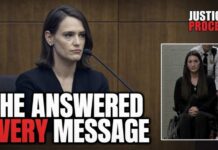
Inside the packed courtroom, the most remarkable move did not come from the state or the defense. It came from the Kirk family’s attorney, Jeff Neiman. He stood and asked Graf to let the full, unredacted video of Robinson’s former roommate and ex-lover, Lance Twigs, play in open court “for all the world to see.” Neiman warned that redactions would “create doubt and distrust in the judicial system,” and said the family believes if evidence is good enough to be admitted, it is good enough for the public.
From the gallery, cameras caught Erika Kirk urging Neiman toward the podium. She has already said, “We deserve to have cameras… I want there to be no hesitation in understanding what happened to my husband that day.” For many conservatives, that call hits home. They watched years of selective leaks, anonymous sources, and edited clips in other high‑profile cases. Neiman’s stance echoes a growing sentiment on the right: sunshine is not the problem, it is the cure. If the state is confident in its evidence, let voters and viewers see it, not just filtered headlines.
Why The Defense Fears A Trial By Media
The defense team sees the same cameras and clips very differently. They presented consulting and expert testimony describing just how saturated Utah County is with this case and how strongly many residents already think Robinson is guilty. A jury consultant reported huge recognition numbers and strong guilt assumptions driven by media coverage, social posts, and nonstop commentary. A cognitive psychologist explained that video and audio clips create emotional reactions that stick, even when later evidence points the other way.
Defense lawyers followed that with a motion to seal dozens of exhibits before the hearing. They said they were not trying to hide evidence forever, but trying to stop misreported and cherry‑picked material from “infecting the potential jury pool” months before a trial. They pointed to past media quotes by a prosecutor about DNA and forensic findings, which they say crossed ethical lines by hinting at guilt outside court. Their argument leans on classic constitutional rights dear to conservatives: a real presumption of innocence and a fair trial, not a rush to judgment on cable news.
Judge Graf’s Attempt To Walk A Narrow Line
Graf did not buy the defense’s broad sealing request. He ruled that they had not shown that revealing the evidence at a preliminary hearing would destroy Robinson’s chance at a fair trial. At the same time, he did not give the Kirk family total victory either. He ordered redactions to sensitive parts of Twigs’ video testimony before it plays in court, trimming details he believes could be unfair or too prejudicial at this early stage.
Graf also imposed a structured process on future media access. Outlets must apply at least fourteen days before a hearing and keep written requests within a short page limit, with no extra oral arguments. That rule keeps him, not the loudest pundit, in control of how cameras enter the courtroom. Yet it also slows instant, wall‑to‑wall coverage that many transparency advocates want. Once again, he is trying to split the difference: open doors, controlled exposure.
Why This Fight Matters Beyond One Utah Courtroom
This clash is not happening in a vacuum. Federal studies show most sealed criminal cases are closed to protect ongoing investigations, juveniles, or sensitive national security matters, not to shield powerful officials from embarrassment. High‑profile criminal defense guides stress that the hardest fights often involve media pressure, forensic uncertainty, and due process, not one smoking gun. In modern cases, investigators collect some physical evidence and surveillance, but rely heavily on statements and testimony, which are easier to spin on television and online.
PRELIMINARY HEARING UPDATE: CHARLIE KIRK ASSASSINATION CASE EXPLAINED
We are nearing the end of day two in the multi-day preliminary hearing for Tyler Robinson, the man accused of fatally shooting conservative activist Charlie Kirk at Utah Valley University. Prosecutors… pic.twitter.com/f3HLDnsXKs
— Crime Talk with Scott Reisch (@CrimeTalkNet) July 7, 2026
Conservatives watching the Kirk case see a familiar pattern. A young conservative leader is killed; the state pushes for the harshest penalty; media commentators flood the zone with takes and theories; and families demand real transparency instead of narrative control. The Utah courtroom has become a test lab for one question: can we keep both things at once, a truly fair trial and a truly informed public? Graf’s rulings so far say yes. The coming months will show whether that faith survives the next wave of headlines.
Sources:
apnews.com, pbs.org, youtube.com, atty.utahcounty.gov, fox4news.com, washingtontimes.com, 6abc.com, amu.apus.edu, anthemeap.com
© patriotnewsdaily.com 2026. All rights reserved.