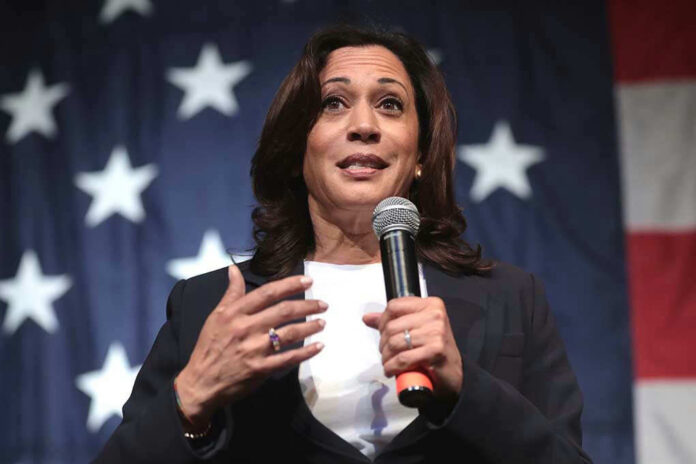
Kamala Harris has delivered a stinging critique of her own party, labeling the Democrats as “stuck in the past” after a bruising 2024 election defeat.
Story Overview
- Kamala Harris criticizes Democratic Party for outdated strategies post-2024 defeat.
- She highlights failures in addressing economic anxiety and effective messaging.
- Harris published a memoir detailing internal party failures and decision-making flaws.
- Her critique aligns with internal analyses pointing to structural issues within the party.
Harris’s Bold Critique
Kamala Harris, former vice president and 2024 Democratic presidential nominee, has publicly criticized the Democratic Party for its outdated strategies. Harris argues that the party’s messaging is inauthentic and overly influenced by consultants, failing to resonate with voters. Her critique emerges from a post-2024 election analysis, where she emphasizes the party’s inability to address economic unease convincingly. This failure, she contends, contributed significantly to the Democrats’ defeat in 2024.
Harris’s comments serve as a warning and a call for modernization in the party’s approach to media and coalition management. Her critique is part of a broader post-mortem analysis conducted by Democratic strategists, who agree that long-term structural and messaging failures, rather than a sudden ideological shift among voters, led to the election loss.
Historical Context and Tensions
The Democratic Party has faced long-standing internal tensions between its establishment leadership, progressive activists, and diverse constituencies. In recent election cycles, debates have centered on how to address economic anxiety and inequality, whether to embrace progressive positions or adopt a more moderate strategy, and how to respond to the right-wing media ecosystem. By 2024, right-wing investments in media had grown, framing the political environment in ways that Democrats struggled to counter.
Harris’s memoir criticizes Biden’s decision to seek a second term as “reckless,” and highlights internal party tensions over her candidacy and the party’s strategic decisions. Following Biden’s exit from the race in July 2024, Harris became the nominee, launching a hurried 107-day campaign that ultimately ended in defeat. The party’s handling of the Israel-Gaza conflict also deepened fractures between the Democrats and broader left movements, contributing to voter disillusionment.
Kamala Harris Gives Blunt Review of 'Stuck in the Past' Democratic Party https://t.co/itD2TsRqPf
— Mediaite (@Mediaite) December 17, 2025
Impact and Strategic Reassessment
Harris’s blunt critique has sparked intra-party conflict and blame-setting, with debates over who holds responsibility for the 2024 defeat. Her statements have intensified pressure on Democrats to decide whether to change messaging and strategy substantively or stay the course. Her “stuck in the past” narrative reinforces perceptions that the party is out of touch, potentially harming its brand even as it pushes for reform.
Democratic-aligned groups like Way to Win have conducted extensive surveys and focus groups to understand voter attitudes, concluding that economic unease and a fractured political left were significant factors in the 2024 defeat. They suggest that Democrats need to invest in permanent media and narrative infrastructure and shift messaging to more authentic, locally grounded voices.
Long-term Implications and Reform
Harris’s critique may lead to strategic and structural reforms within the Democratic Party. These could include investing in media infrastructure to rival right-wing ecosystems, shifting from consultant-centric messaging to more authentic communication, and adjusting issue emphasis around economic security and foreign policy. Persistent criticism from Harris could influence leadership contests, encouraging new figures who advocate for modernizing the party.
Key Democratic constituencies, including young voters and racial minorities, were central to the coalition challenges faced in 2024 and are primary targets for future messaging and trust-building efforts. Movement organizations focused on racial justice and climate may also play a crucial role in shaping future Democratic strategies. Harris’s emphasis on inauthentic messaging challenges the dominance of the consulting class and could reshape how campaigns are structured and funded.