The most revealing part of the Newsom immigration clash is not the arrest scene itself. It is the gap between what federal officials said in public and what one agent later wrote in private.
Quick Take
- Federal agents appeared outside Governor Gavin Newsom’s press event in downtown Los Angeles during an immigration enforcement operation.
- Department of Homeland Security officials said the activity was routine law enforcement, not a move aimed at Newsom.
- New court filings included text messages in which a federal agent called the deployment a “stunt” and “just a political agenda.”
- The episode quickly became a fight over motive, not just method, and that is why it spread so fast.
What Happened in Little Tokyo
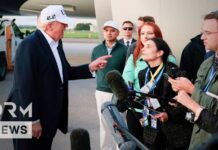
Federal immigration agents showed up outside Newsom’s press conference in the Little Tokyo area of downtown Los Angeles while he was speaking about redistricting. Local reporting said at least one person was detained during the operation, and the scene drew immediate attention because it unfolded beside a high-profile political event rather than in a quiet enforcement setting.
The Department of Homeland Security (DHS) said the agents were carrying out normal enforcement work. Tricia McLaughlin, a DHS spokesperson, said the agency’s focus was “upholding the law—not on Gavin Newsom,” and U.S. Border Patrol Commander Gregory Bovino described the activity as “roving patrol duties.” That public line matters because it sets up the central dispute over whether the timing was accidental or meant to send a message.
The Private Texts Changed the Story
Court filings later gave Newsom’s critics and supporters something far sharper than a shouting match. In the records, one federal agent wrote that the deployment was “a stunt” and “just a political agenda,” and said it seemed “purely political” with no good operational basis. Those texts did not come from a political opponent. They came from inside the government, which gave the claim unusual force.
The same filings also included sworn testimony that added more weight to the criticism. The agent said the officers “marched to a Democratic governor’s press conference” and that the move did not seem to have a strong enforcement reason. For readers trying to separate theater from routine policing, that is the detail that stings. It suggests the agents on the ground did not all share the same view of why they were there.
Why the Optics Hit So Hard
This episode landed in a familiar place in American politics. Immigration enforcement often looks routine to the government and performative to critics when it happens in public view near cameras, activists, and elected officials. Newsom and other California Democrats used the moment to argue that the Trump administration was trying to intimidate opponents. DHS answered that the agents were simply doing their jobs.
That split reflects a larger problem with modern enforcement politics. The public sees the street scene first. It does not see the targeting files, tasking orders, or intelligence behind the operation. So when agents appear outside a governor’s event, many people read meaning into the setting itself. In this case, the private text messages made that instinct harder for DHS to brush off.
Texts show DHS agent griping that ICE’s presence at Newsom presser was political 'stunt' https://t.co/gy6BLyUrxh
— Anne Schmersal (@Anneschmera) July 30, 2026
Newsom’s team then pressed for records about why the agents were there. That demand pushed the story beyond one arrest and into a broader fight over federal power, state politics, and the use of law enforcement as a public signal. Even officials who defend aggressive immigration action have reason to worry when their own personnel describe a visible operation as political theater. That kind of language invites public suspicion fast.
Why the Fallout Matters
The deeper issue is not whether federal officers can operate in a city where a governor is holding an event. They can. The sharper question is whether the government chose a place and moment that predictably created a political spectacle. If the official explanation is routine patrol work and the internal language sounds like messaging, the public is left to judge which version feels more credible.
That is why this story has staying power. It combines a street-level enforcement action, a governor’s public outrage, and internal texts that appear to undercut the government’s own defense. For readers who care about basic trust in law enforcement, that mix is hard to ignore. It shows how quickly a single deployment can turn into a test of credibility, not just tactics.
Sources:
mediaite.com, abc7.com, nytimes.com, ktvu.com, thedailybeast.com, smobserved.com, youtube.com
© patriotnewsdaily.com 2026. All rights reserved.