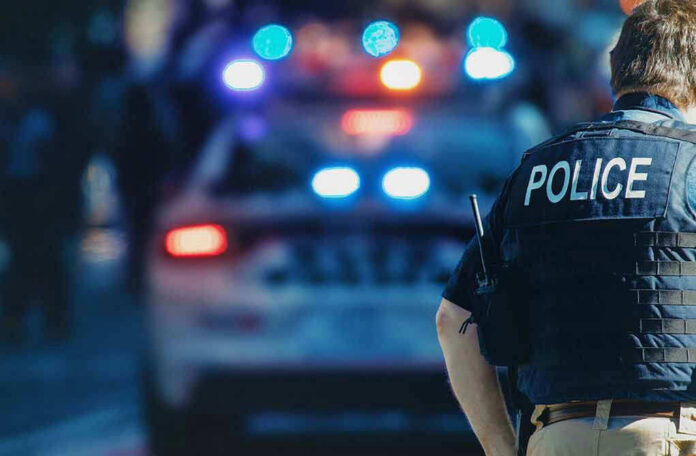
South Austin’s night spiraled into a multi-scene gunfire puzzle, and the most dangerous piece may be how little anyone truly knew in the first hour.
Story Snapshot
- Police raced to multiple reported shooting scenes and warned of possible suspects still moving.
- Authorities have handled recent Austin violence as active, mobile threats with rapid response and public alerts. [1]
- Early narratives risk merging distinct incidents before forensics separate fact from fear. [3]
- Clear proof for a specific May 17 South Austin sequence remains thin in publicly available records. [1]
Police framed a moving threat; the first hour set the tone
Austin officers reportedly worked a cluster of gunfire calls across South Austin while warning of suspects on the move and telling residents to shelter. That framing matches how the Austin Police Department handled the March 1 bar corridor attack, when officers and medics reached the scene in under a minute and confronted a shooter who used both a pistol from a vehicle and a rifle across connected streets. The response signaled an urgent, mobile hazard, not a contained barroom brawl. [1]
Public-safety doctrine rewards that posture. When dispatchers receive overlapping “shots fired” calls, the risk calculus favors assuming a roaming perpetrator until evidence narrows it. On March 1, police ended the threat by shooting the attacker, a step they reserve for imminent danger. That outcome, coupled with victims spread across micro-locations, hardened the department’s bias toward treating fast, multi-spot reports as one escalating emergency rather than discrete, unlucky coincidences. [1]
Evidence gaps haunt the May 17 narrative
The dossier on the specific May 17 South Austin claims remains thin. The available sources lean on earlier or unrelated Texas incidents, not a primary Austin Police Department bulletin, 911 computer-aided dispatch timeline, or an official shelter-in-place text for that night. Without an arrest affidavit naming suspects or a sequence of confirmed scenes, readers are left to infer from analogy. That is a risky bridge to cross because analogy feels persuasive in crises but often conceals critical differences. [1]
Past cases show why caution matters. In Carrollton, north of Dallas, the police chief quickly rejected the “random gunfire” label and tied the shooting to a meeting gone deadly, even as the scene still crackled with rumor. That single sentence changed how residents processed risk: targeted violence signals private grievance; random violence signals public vulnerability. Getting that distinction wrong for even a few hours can stampede a city, overwhelm 911, and send parents sprinting to schools. [2]
How early claims get sticky—and how to test them
First narratives stick because they are repeated and amplified by necessity. Dispatchers must issue guidance; officers must triage; newsrooms must warn. But sticky is not the same as true. The practical fix is procedural: publish the incident clock. A clean, redacted timeline of 911 calls, unit arrivals, recovered casings, and detentions can confirm whether the city faced one shooter weaving through neighborhoods or multiple unrelated skirmishes. Body-camera clips and radio traffic can show when suspect counts changed and why. [3]
Austin Shooting Spree: 4 Shot in 9 Random Attacks, Shelter-in-Place Alert Issued https://t.co/xunngb8cKQ
— DLW 🔥#MAGA (@Dlw20161950) May 17, 2026
Ballistics provides the hard brake on speculation. Matched shell casings, rifling signatures, and weapon recoveries can connect or separate scenes definitively. If police say two suspects sit in custody and one remains at large, the onus is to pair that claim with case numbers, charges, and weapons or vehicle links. That discipline serves public confidence and officer safety. It also aligns with common-sense expectations: warn first, yes—but close the loop with facts as soon as they are fit for daylight. [3]
What responsible urgency looks like
Residents deserve two things at once: maximum-speed alerts and minimum-spin clarity. The March 1 record shows Austin Police Department can move with dangerous speed when lives hang by seconds. That deserves credit. The Carrollton statement shows police can also tighten language fast when evidence points to a targeted dispute. That deserves emulation. The May 17 picture, as preserved here, lives between those poles. Until the city publishes the logs and affidavits, the span between fear and fact stays wider than it needs to be. [1][2][3]
Sources:
[1] Web – 2026 Austin bar shooting – Wikipedia
[2] YouTube – Central Texas shooting spree leaves six dead, including suspect’s …
[3] YouTube – Central Texas shooting spree subject set to appear in …