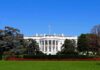
Secret Service officers gunned down an armed suspect who opened fire near the White House on Monday afternoon, striking the assailant while a juvenile bystander caught a stray bullet in one of Washington’s most secured zones.
Story Snapshot
- Plainclothes Secret Service surveillance officers spotted a concealed firearm on a 45-year-old man near the National Mall around 3:30 p.m. on May 4, 2026
- The suspect fled and fired at approaching officers, prompting uniformed Secret Service police to return fire and strike him
- A juvenile bystander sustained non-life-threatening injuries from the suspect’s gunfire during the exchange
- The incident occurred just one week after an alleged assassination attempt on President Trump and minutes after Vice President JD Vance’s motorcade passed through the area
- Investigators have not determined whether the gunman intended to target the president or other government officials
When Surveillance Systems Catch What Human Eyes Miss
Trained Secret Service surveillance detection personnel spotted what they call a “visual print” of a concealed weapon on a man loitering near 15th Street and Independence Avenue. These plainclothes officers specialize in identifying threats in crowded public spaces before violence erupts. The 45-year-old suspect exhibited enough suspicious behavior and physical indicators that officers moved to investigate. The system worked exactly as designed, catching a potentially lethal threat approximately half a mile from the White House and steps from the Washington Monument.
The Confrontation Unfolds in Seconds
When officers approached the suspect, he ran. Then he made a decision that sealed the outcome: he fired his weapon toward Secret Service personnel. Uniformed Secret Service police responded with gunfire, striking the suspect. The entire confrontation happened in moments, with tourists and office workers nearby. Deputy Director Matt Quinn explained at a press briefing that the suspect fired first, leaving officers no choice but to engage. A firearm was recovered from the scene, confirming the initial threat assessment.
An Innocent Caught in the Crossfire
The suspect’s bullets struck a male juvenile bystander during the exchange. The young victim sustained non-life-threatening injuries and received immediate medical transport. This collateral damage raises uncomfortable questions about public safety protocols in areas where thousands of civilians move through security perimeters daily. The National Mall attracts families, school groups, and international visitors who assume they’re safe in America’s most protected neighborhood. One stray bullet shattered that assumption for at least one family on Monday afternoon.
Secret Service officials declined to comment on the suspect’s medical condition beyond confirming his hospital transport. Investigators face the critical task of determining motive. Deputy Director Quinn stated plainly: “Whether or not it was directed to the president or not, I don’t know. But we will find out.” The Metropolitan Police Department has launched a formal investigation into the use of force, standard procedure when law enforcement officers discharge weapons in the district.
A Disturbing Pattern Emerges in the Capital
This shooting marks the latest in a series of armed confrontations near federal buildings in Washington. Just over a week earlier, an alleged assassination attempt targeted President Trump at the White House Correspondents’ Dinner. Weeks before that, a gunman opened fire on two National Guard soldiers blocks from the White House, critically injuring one and killing another. White House Chief of Staff Susie Wiles convened emergency security meetings with the Secret Service and Department of Homeland Security to review protocols and practices for protecting the president during major events.
The timing compounds security concerns. Vice President JD Vance’s motorcade had passed through the exact location minutes before the shooting erupted. While officials say the incident appears unrelated to the VP’s presence, the proximity raises questions about threat assessment and area clearance procedures. The White House went into brief lockdown as a precautionary measure. These aren’t isolated incidents anymore; they’re forming a pattern that demands serious attention from federal security agencies.
What This Reveals About Modern Presidential Protection
The Secret Service’s surveillance detection program proved its worth on Monday. Officers identified a concealed threat in a crowded public space and moved to intercept before the suspect could advance toward protected officials or facilities. This represents textbook execution of perimeter security doctrine. Yet the injury to a civilian bystander exposes the inherent risks of armed confrontations in populated areas. Federal security agencies face an impossible balance: protecting government officials while ensuring public safety in open, accessible spaces that define American democracy.
Secret Service shoots armed man near White House after gunfire; vice president’s motorcade had just passedhttps://t.co/N2ApM8HhkS
— Free Press Kashmir (@FreePressK) May 5, 2026
Investigators must now determine whether this suspect represents another assassination attempt, a disturbed individual acting randomly, or something else entirely. The answer matters enormously for security planning going forward. If multiple coordinated threats are targeting the president and federal facilities, the Secret Service will need to dramatically expand protective perimeters and restrict public access to areas near the White House. If these incidents remain unconnected, the explanation becomes almost worse: Washington now attracts enough armed individuals willing to shoot at federal officers that multiple incidents occur within weeks of each other.
Sources:
Secret Service officers shoot armed individual near White House
Secret Service officers exchange gunfire with armed suspect near White House
Secret Service shoots armed man near White House