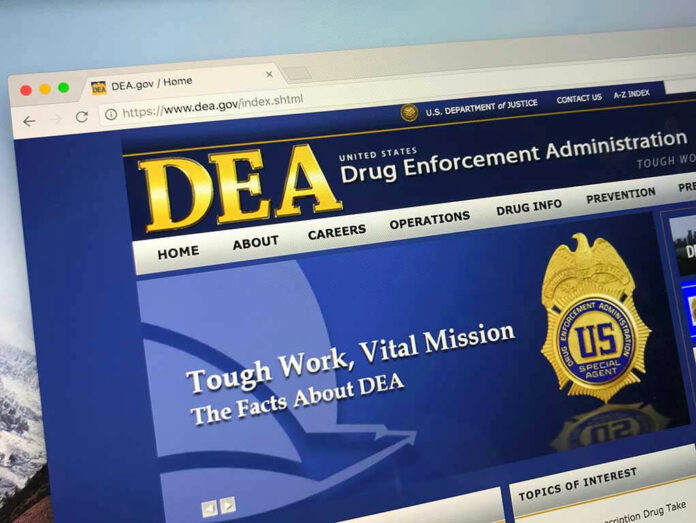
A sweeping DEA operation has exposed the disturbing reach of the Mexican Sinaloa Cartel into small-town New Hampshire, igniting new urgency among conservatives concerned about border security, drug trafficking, and federal-local law enforcement coordination.
Story Highlights
- DEA and Franklin Police arrested 27 individuals connected to the Sinaloa Cartel in a major drug sweep.
- Large quantities of fentanyl, methamphetamine, cash, and a firearm were seized, signaling cartel infiltration into rural New England.
- The operation underscores the urgent need for robust border security and constitutional law enforcement cooperation.
- Experts warn cartel tactics are evolving, demanding continued vigilance to protect communities and uphold conservative values.
Federal and Local Law Enforcement Disrupt Cartel Network
On August 26-27, 2025, a coordinated effort between the U.S. Drug Enforcement Administration (DEA) and Franklin Police resulted in the arrest of 27 individuals in Franklin, New Hampshire. Authorities executed three search warrants, seizing significant amounts of fentanyl and methamphetamine—drugs fueling the ongoing opioid epidemic—alongside approximately $100,000 in cash and a firearm. The operation’s scale and success highlight the effectiveness of federal-local partnerships in combating international criminal organizations that threaten American communities and constitutional order.
The Sinaloa Cartel’s direct connection to this small New England city illustrates the alarming adaptability of transnational drug networks. For months, law enforcement traced cartel-supplied narcotics flowing through established routes, with neighboring Lawrence, Massachusetts, serving as a known hub for illegal drugs entering New Hampshire. This infiltration represents a broader trend: rural and suburban communities increasingly bear the brunt of cartel-driven opioid and meth abuse, undermining family safety and economic stability.
Origins and Expansion of the Sinaloa Cartel’s Influence
The Sinaloa Cartel remains one of Mexico’s most powerful and persistent drug trafficking organizations, dominating U.S. distribution channels for cocaine, heroin, methamphetamine, and, most recently, fentanyl. The opioid crisis has escalated into its deadliest phase due to fentanyl’s potency. In recent years, Mexican cartels have deepened collaboration with Chinese criminal groups, importing precursor chemicals crucial for synthetic drug production. These developments challenge conventional law enforcement strategies and demand innovative responses to safeguard American sovereignty and public health.
Franklin’s experience mirrors broader trends across New England, where cartel penetration into smaller communities is increasingly documented. Previous DEA operations targeted similar networks, but this sweep stands out for its scale and explicit cartel linkage. The decentralized structure of the Sinaloa Cartel relies on local actors for street-level distribution, making federal-local cooperation essential for dismantling supply chains and restoring community integrity.
Stakeholders, Community Impact, and Conservative Response
The operation involved the DEA New England Field Division, Franklin Police, and 27 individuals charged as alleged distributors, couriers, or facilitators for cartel-supplied drugs. DEA Special Agent in Charge Jarod Forget and the Franklin Police Chief led the campaign to disrupt networks endangering local families. The Sinaloa Cartel’s motivation remains profit and market expansion, exploiting gaps in border security and local enforcement. Residents of Franklin and surrounding areas face ongoing risks from drug abuse and associated crime, with families of the arrested grappling with fallout.
Short-term effects include disruption of a major local drug network and removal of lethal substances from circulation. Long-term, experts caution that new actors may attempt to fill the void, emphasizing the need for sustained vigilance. Economically, these operations incur costs but potentially reduce healthcare and social burdens if drug supply declines. Socially, there is heightened concern about crime, and possible stigmatization of affected neighborhoods. Politically, pressure mounts on policymakers to address opioid trafficking, cross-border crime, and safeguard constitutional values central to conservative Americans.
Pics: 27 arrested in major drug trafficking bust in New Hampshire https://t.co/aMZdMTPDsR pic.twitter.com/FYqJL6R3LT
— American Military News (@AmerMilNews) August 29, 2025
Industry and academic experts agree: enforcement alone cannot solve the opioid crisis. Combating cartels requires targeting both supply and demand, promoting addiction treatment, and strengthening international cooperation, particularly given the role of Chinese suppliers. While some community leaders praise the crackdown as essential, others warn of unintended consequences, including trafficking displacement and increased incarceration rates. Nonetheless, the operation reaffirms the necessity of robust law enforcement and vigilance against international criminal infiltration that undermines American traditions and family security.
Sources:
27 people charged in DEA drug sweep in Franklin
27 arrested by feds in fentanyl, meth bust tied to Mexican cartel