A state police helicopter and a small Cessna struck each other in the evening sky near Carlisle Airport and came down hard by the runway.
Story Snapshot
- Officials reported a midair collision around 7:50 p.m. near Carlisle Airport on August 19, 2026.
- The aircraft were a Cessna 150 and a Bell 407 operated by Pennsylvania State Police.
- Two people were aboard the helicopter; officials called the coroner to the scene.
- Federal Aviation Administration and National Transportation Safety Board will investigate.
What happened over Carlisle’s runway
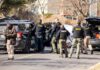
The Federal Aviation Administration reported that a Cessna 150 and a Bell 407 helicopter collided in midair near Carlisle Airport in Cumberland County at about 7:50 p.m. on August 19, 2026. Multiple outlets identified the helicopter as a Pennsylvania State Police aircraft. Emergency crews converged on the airport within minutes. Local reporting described the helicopter on its side by the runway with smoke visible, and debris scattered close to airport grounds. Airspace around the airport was closed while crews worked and investigators secured the scene.
Officials said two people were on the helicopter during the flight. Reports did not confirm how many people were on the Cessna 150 at the time of impact. Cumberland County authorities requested the coroner to respond to the airport on Wednesday night, a step often used when a fatal outcome is likely. Reporters on scene counted dozens of emergency vehicles, including fire, police, and emergency medical services, working along the runway and airport perimeter.
Who investigates and what they will look for
The Federal Aviation Administration and the National Transportation Safety Board will conduct the investigation, with the National Transportation Safety Board in the lead for cause and factors. Investigators will map wreckage paths, review radio calls, and analyze surveillance and flight-tracking data if available. They will interview pilots, responders, and airport staff. They will also study weather, aircraft maintenance, pilot qualifications, and local traffic procedures common to non-towered airports like Carlisle. A preliminary report usually posts within weeks, with a final report following after deeper analysis.
Patterns from past midair cases give early guideposts. Most collisions in general aviation happen in or near the airport pattern while pilots use visual separation, not air traffic control vectors. A National Transportation Safety Board study found the airport environment accounts for most midair collisions and near misses, where traffic density and sightlines tighten margins. The Federal Aviation Administration’s advisory on see-and-avoid warns that scanning takes real time and that even alert pilots can miss traffic without disciplined technique and electronic aids.
Why this setting raises risk and what common sense demands
Uncontrolled fields require pilots to self-announce and self-separate while flying standard patterns. Fixed-wing airplanes and helicopters often share the same airspace but fly different profiles and speeds. That mix can compress reaction time, especially in base-to-final turns or on short final, where statistics show a high share of conflicts and collisions. The lesson aligns with conservative common sense: clear rules, personal responsibility, and disciplined radio work matter most when no controller watches the pattern.
Our condolences to the family & loved ones of the Cessna 150 pilot who lost their life in the collision at Carlisle Airport.
We’re also keeping PSP Corporal Corman & Trooper Mills in our thoughts as they recover.
Thank you to all our first responders who responded.
📸 CBS 21 pic.twitter.com/LMmqTIsfUj
— Cumberland County, PA (@CumberlandCoPA) August 20, 2026
Technology helps but cannot replace vigilance. Traffic displays and collision alerts add another set of eyes, yet they still rely on good judgment and standard procedures. The National Transportation Safety Board’s broader work shows that midair risk falls when routes, altitudes, and flows keep fast and slow aircraft apart, and when agencies review these layouts with current data, not habit. Local airports and law enforcement aviation units can lead by example through training, predictable procedures, and transparent after-action reviews once the facts are in.
What to watch next
Expect the National Transportation Safety Board to release a preliminary summary with the event timeline, aircraft registrations, and initial factual findings. That document often answers the core who, what, and where, and may include early notes on communications and pattern use. The final report will address probable cause and contributing factors. Until then, officials have confirmed the aircraft types, the presence of two people on the state police helicopter, the evening collision time, and the scope of the emergency response.
Sources:
nypost.com, local21news.com, facebook.com, rogersaviationnw.com
© patriotnewsdaily.com 2026. All rights reserved.