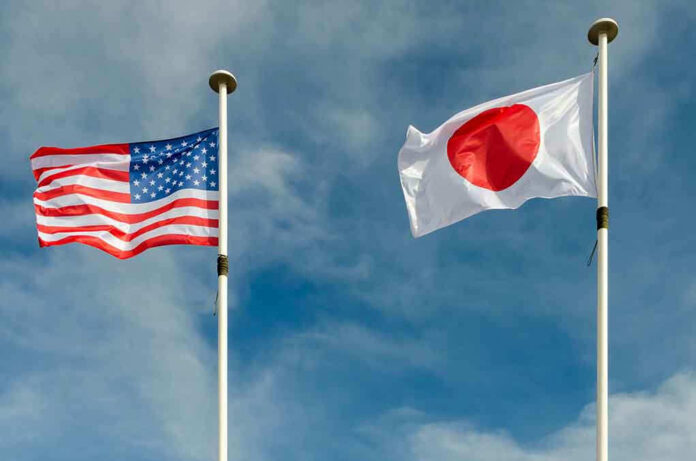
A new trade agreement maintains higher tariffs on specific Japanese goods, leaving some industries without relief.
Story Snapshot
- The U.S. and Japan reached a trade deal, setting a 15% tariff on most Japanese goods.
- Higher tariffs remain on certain goods like beef and metals.
- Japan commits to a $550 billion investment in the U.S.
- Ongoing interpretation differences exist between U.S. and Japanese officials.
U.S.-Japan Trade Deal: A Complex Compromise
The United States and Japan negotiated a significant trade agreement in July 2025, which reduced a previously threatened 25% tariff on Japanese exports to a more manageable 15%. However, this compromise does not extend to Japanese goods already facing tariffs above 15%. This includes essential exports like beef and certain metals, which will continue to be subject to their existing higher rates. This decision reflects a careful balance between easing trade tensions and protecting domestic industries.
The trade agreement emerged amidst ongoing efforts by the U.S. government to address trade imbalances and bolster domestic industries. President Trump’s administration declared a national emergency over trade deficits, leveraging tariffs as a tool under the International Emergency Economic Powers Act. The move to a 15% tariff aims to stabilize trade while ensuring strategic sectors remain protected from foreign competition. Despite this, the “no stacking” rule has introduced complexity, as it prevents the new rate from replacing higher existing tariffs.
The Strategic Investment Commitment
Japan’s commitment to invest $550 billion in the U.S. is another crucial aspect of the trade deal. This investment is anticipated to fortify the U.S. industrial base, particularly in sectors like semiconductors and energy. Such strategic investments align with broader U.S. efforts to revitalize key industries and secure reciprocal trade terms. While this presents a significant economic opportunity, the exact sectors and allocations of this investment are still being clarified, leaving room for further negotiation and discussion between the two nations.
Amid these developments, officials from both countries continue to navigate the complex landscape of trade regulations and agreements. The U.S. holds a significant leverage position through its executive authority over tariff implementations, while Japan leverages its role as a major investor and strategic ally. The ongoing dialogue seeks to clarify the scope and application of tariffs, particularly for sectors that remain under higher rates.
Ongoing Challenges and Industry Reactions
The trade agreement’s current status has elicited mixed reactions from industry stakeholders. Japanese exporters, particularly in agriculture and metals, face increased costs due to the sustained higher tariffs. On the other hand, sectors benefitting from Japan’s investment in the U.S. may experience positive growth and increased industrial capacity. U.S. consumers and industries reliant on Japanese imports might encounter price increases as businesses adjust to the new tariff landscape.
LUS Commits to Removing Stacked Tariffs on Japanese Goods https://t.co/XSmf0yGjVK
— The Epoch Times (Singapore) (@epochtimestoday) August 8, 2025
Overall, the U.S.-Japan trade deal represents a nuanced approach to international trade, balancing protective measures with strategic economic partnerships. While the agreement offers some respite from more punitive tariffs, the ongoing clarity and application of these tariffs remain crucial for affected sectors. As both countries work through these complexities, the broader implications for bilateral trade and economic security continue to unfold.
Sources:
Assessing the U.S.-Japan Trade Deal Announcement
Kyodo News Report: U.S.-Japan Trade Agreement
White House Fact Sheet on U.S.-Japan Strategic Trade Agreement
Japan Times: Reciprocal Tariff Implementation